
Create/Edit Site Content
Create and Manage Site Content
The Site Content module is the main content management area of ARK Site. It allows Center Administrators to create, manage, and customize various elements of the website.
The following sub-modules are available under Site Content:
-
Site Pages
-
Headers
-
Footers
-
Scroll Buttons
-
Opening Hours
-
Site Forms
-
Site Overlay
1. Site Pages
The Site Pages section displays all pages available within the website. Center Administrators can create, edit, activate, deactivate, and delete pages from this area.
1.1 Page Overview
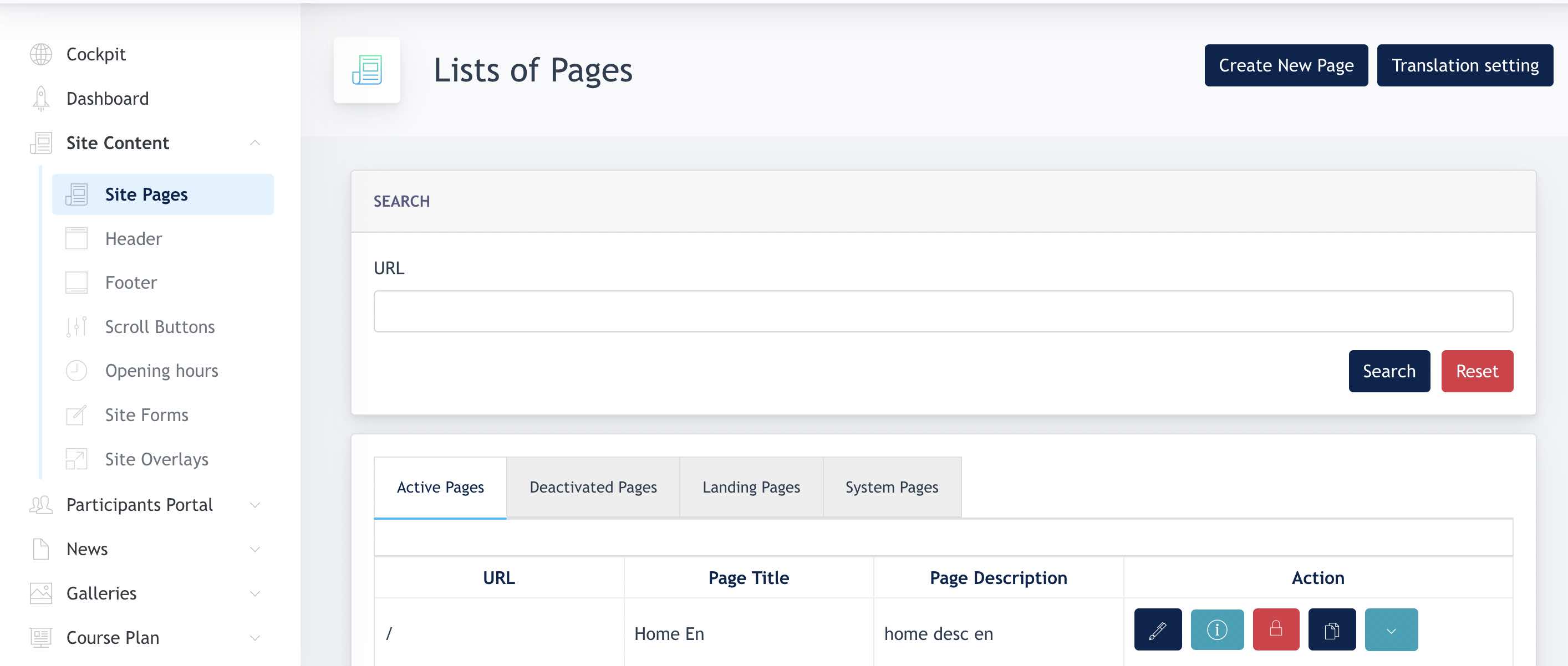
All website pages are displayed in the page listing. Pages are grouped into the following categories:
Active Pages
Pages with Active status that are visible on the website.
Deactivated Pages
Pages with Inactive status that are not visible on the website.
OLS Landing Pages
Standalone landing pages created specifically for Online Lead Services (OLS) campaigns.
System Pages
System-generated pages required for website functionality. These pages cannot be deleted by Center Administrators.
Site Content module screenshot :
1.2 Create New Page
Click Create New Page to create a new website page.
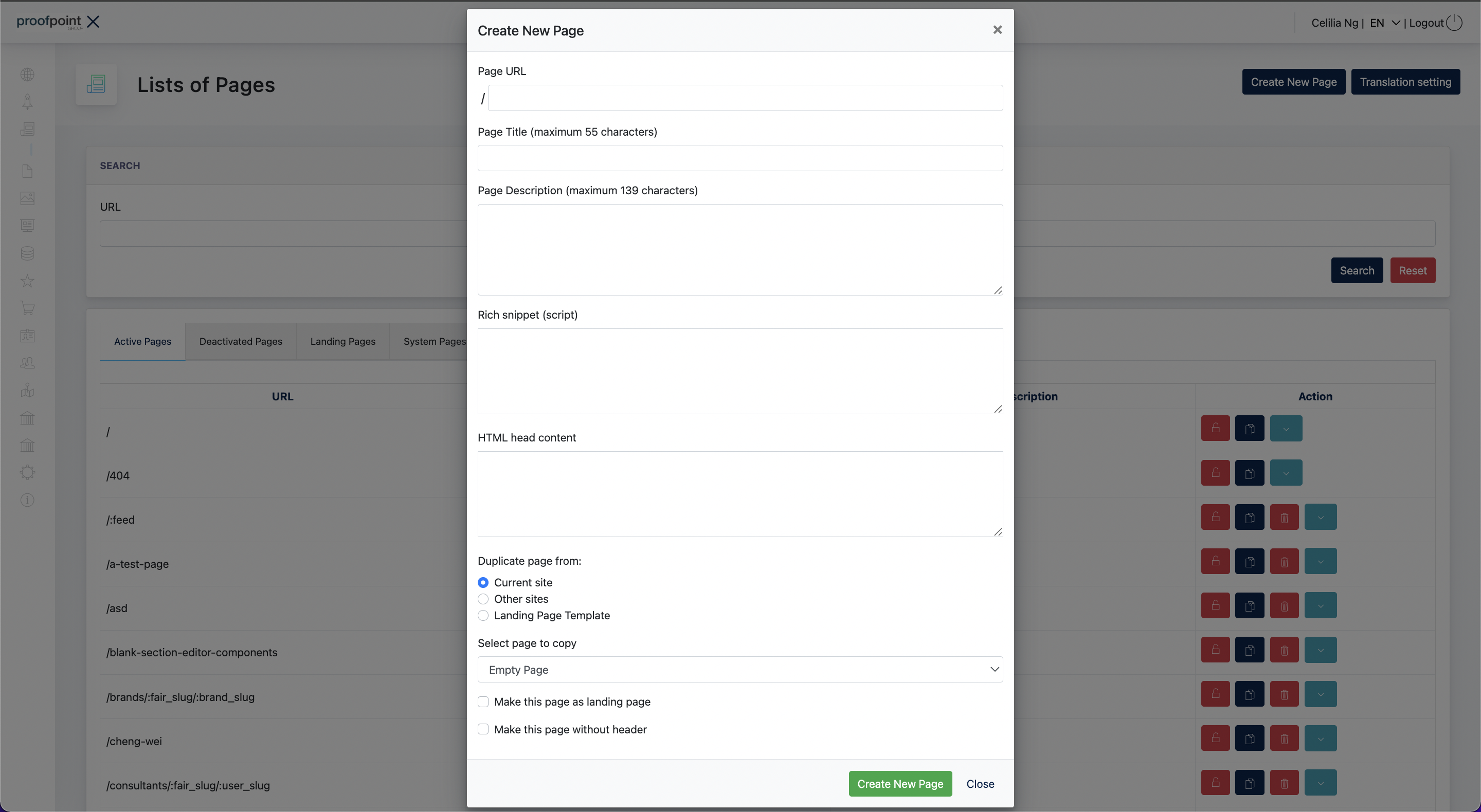
Fill in the following page information:
- Page URL – The URL path of the page.
- Page Title – The page title displayed in search engines and browser tabs.
- Page Description – A brief description of the page content.
- Rich Snippet – Structured data used by search engines, if applicable.
- HTML Head Content – Additional content to be inserted into the page's HTML head section.
Duplicating an Existing Page
When creating a page, administrators may choose to duplicate content from an existing source:
- Current Site – Copy content from an existing page within the current website.
- Other Sites – Copy content from another website. This option is only available to System Administrators and Super Administrators.
- Landing Page Template – Create the page using an available landing page template.
Page Options
The following options are available during page creation:
- Make this page a Landing Page
Creates the page as a standalone landing page. Landing pages are listed under the OLS Landing Pages tab. - Make this page without Header
Removes the website header, including the navigation menu and contact bar, from the page.
Important Information
All required fields must be completed before a page can be created.
When a page is successfully created:
- Standard pages are displayed under the Active Pages tab.
- Pages created as landing pages are displayed under the OLS Landing Pages tab.
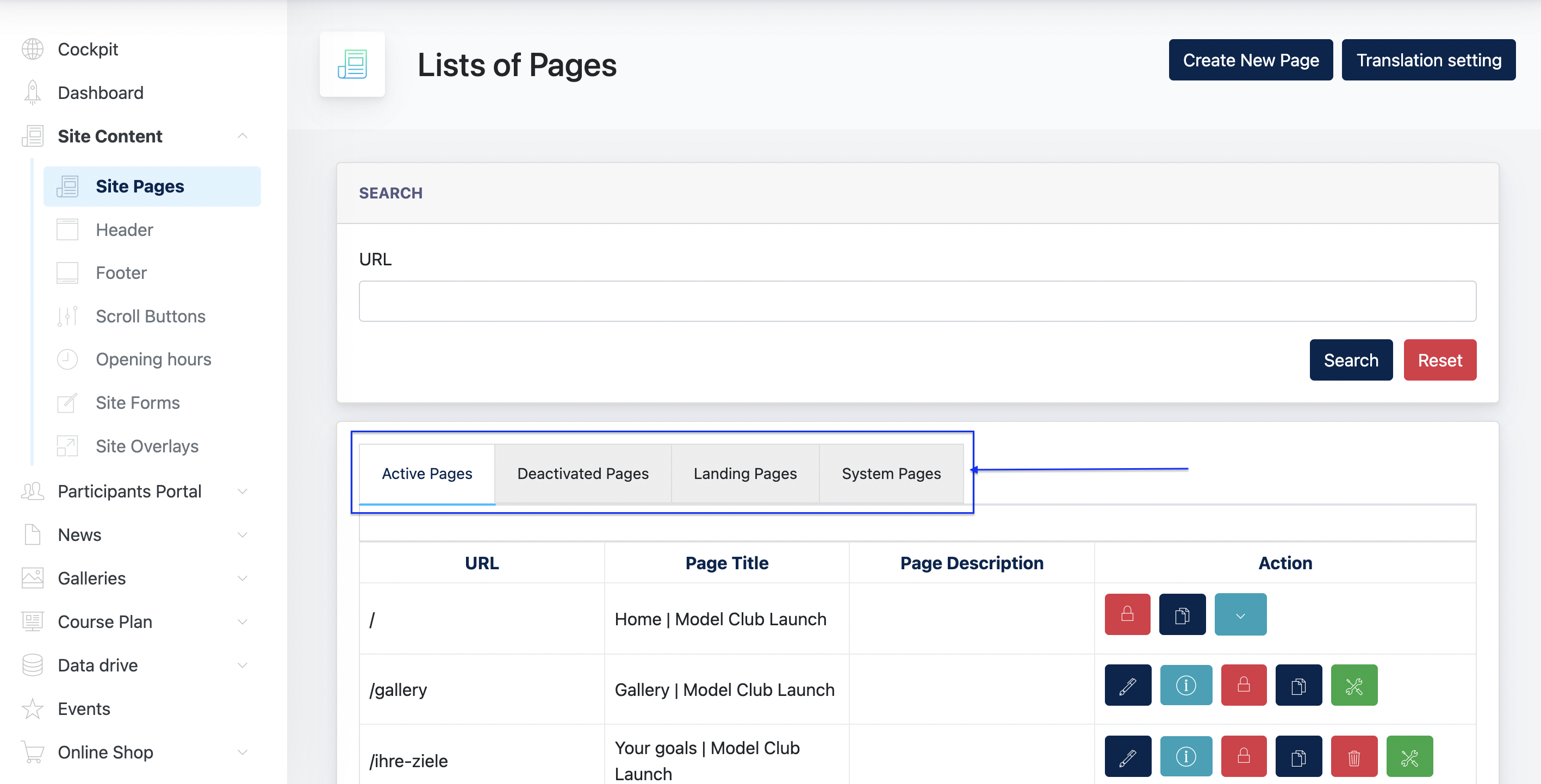
Explanation on Head Content:
The HTML Head Content field allows additional HTML code to be inserted into the
<head>section of the webpage.
This section is not visible to users but is essential for SEO and search engine optimization settings, such as language targeting, metadata, or verification tags.In our setup, this field is mainly used to define hreflang tags, which tell Google and other search engines which version of a page should be shown to users in different language regions (for example, Austria and Germany).
Example :
<link rel="alternate" hreflang="de-at" href="https://www.examplesite.at/">
<link rel="alternate" hreflang="de-de" href="https://www.examplesite.de/">This example specifies:
de-at→ German version for Austria (.atdomain)
de-de→ German version for Germany (.dedomain)These tags help ensure that users in each region are directed to the correct localized version of the website, improving both user experience and search visibility.
In summary: The HTML Head Content field is where we add technical SEO elements — such as
hreflangtags — to make sure Google knows which regional website version to display to each audience.
1.3 Edit a Page
After a page has been created, click the Edit button from the page listing to open the Page Editor.

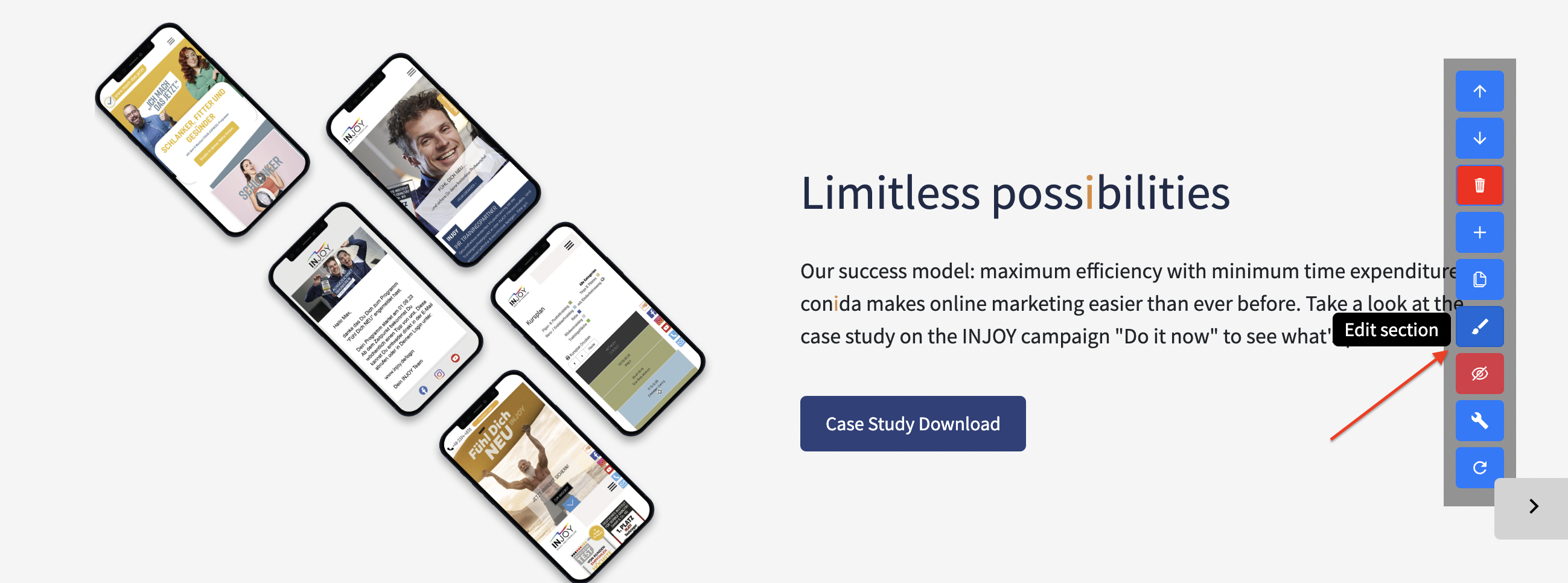
The Conida Page Editor is made up of multiple content sections that together form the page. Each section can be managed individually using the toolbar displayed on the right side of the section.
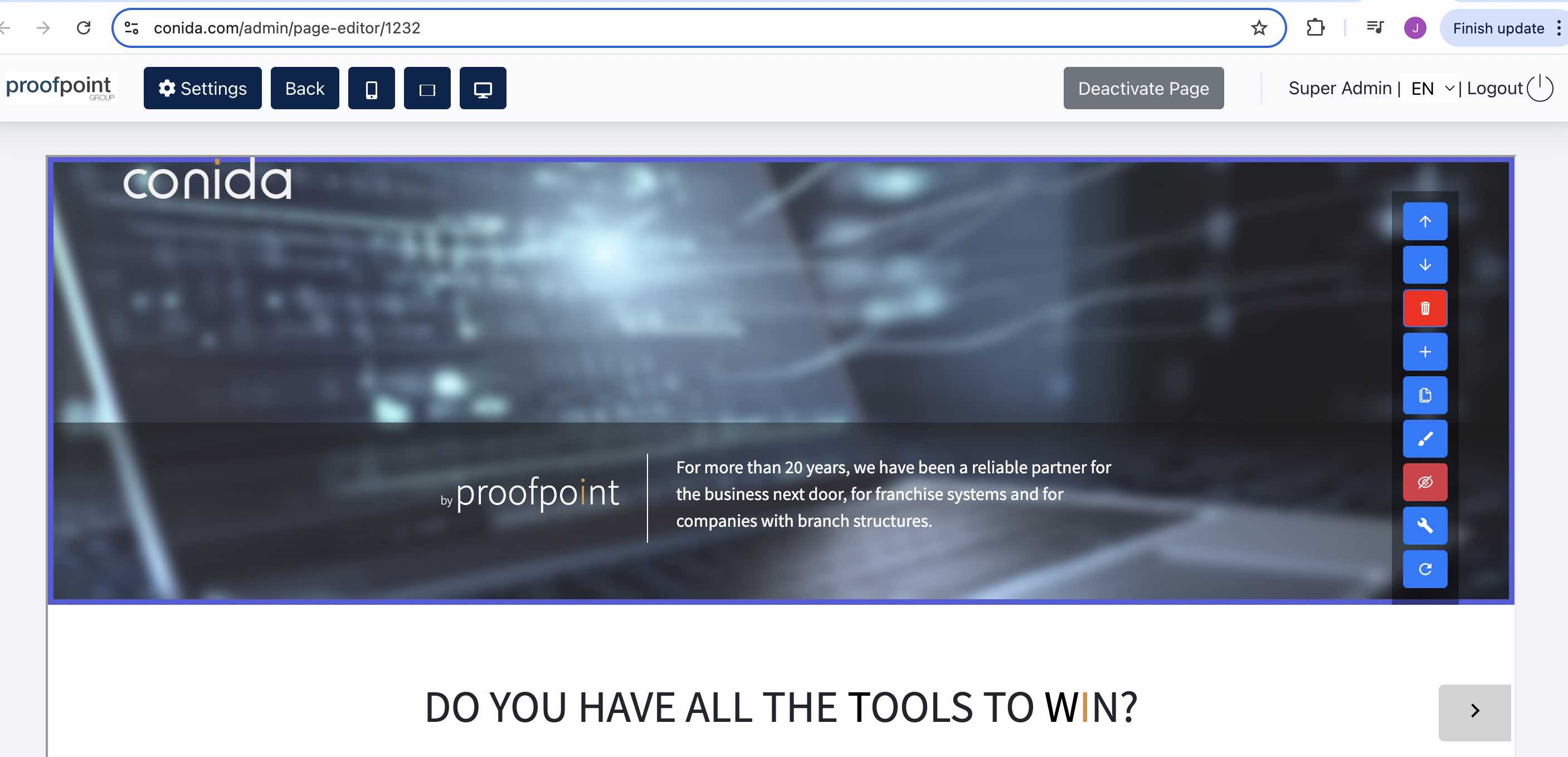
Section Toolbar
The following actions are available for each section:
- Up / Down Arrow – Move the section up or down within the page.
- Delete – Remove the section from the page.
- Add (+) – Insert a new section.
- Duplicate – Create a copy of the current section.
- Edit (Pencil) – Edit the content and settings of the current section.
- Hide (Eye-Crossed) – Hide the section from the website without deleting it.
- Code (Spanner) – Access the section's code settings. This option is only available to System Administrators and Super Administrators.
- Reset – Reset the section to its default configuration.
1.4 Add a Section
Click the Add (+) button to open the Add Section dialog.
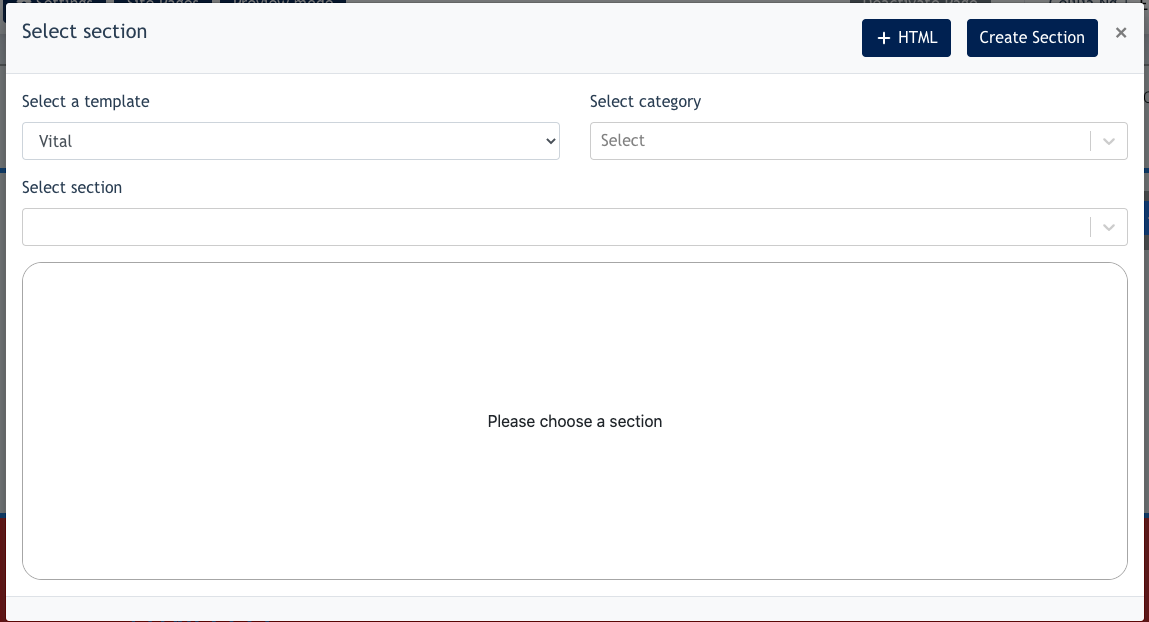
The following options are available:
- Select a Template
Displays the website template currently used by the website.
For example, if the website was created using the Sale template, the Sale template will be selected by default.
Remark: Only System Administrators and Super Administrators can view and select all available templates.
- Select a Category
Choose the category of sections to be displayed. - Select a Section
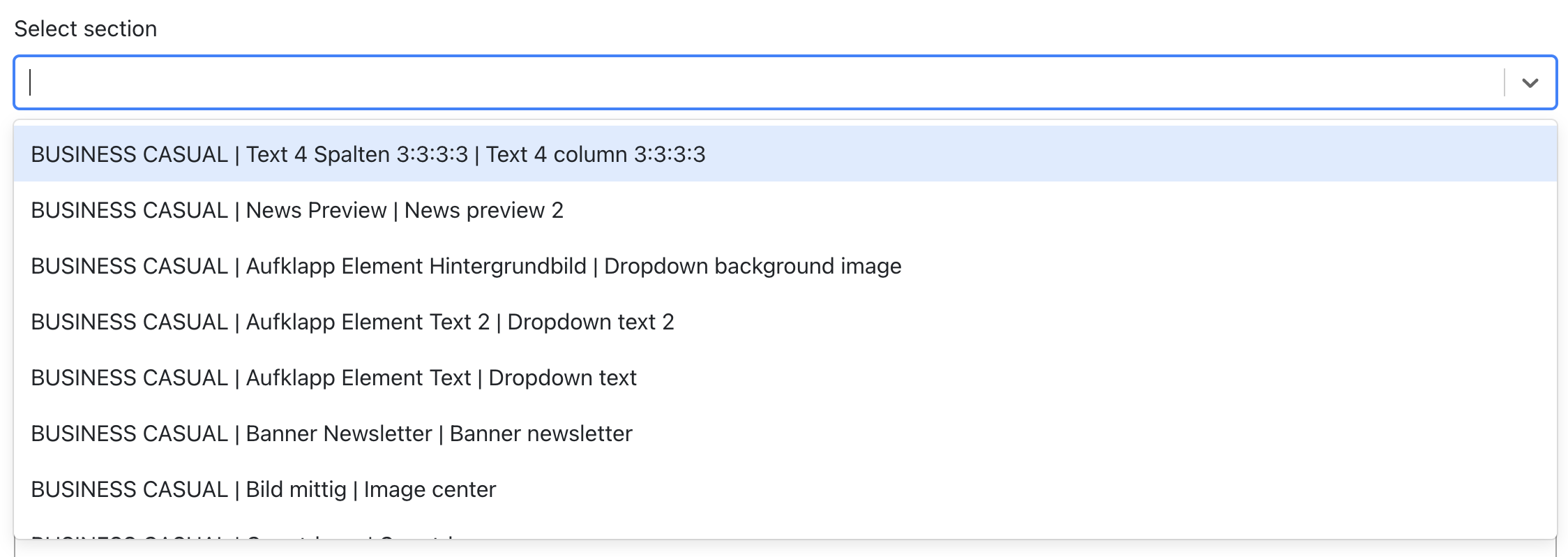
Displays the available section templates within the selected category. Select a section to add it to the page.
Screenshot of Select a Section listing :
1.5 Edit a Section
After a section has been added to the page, click the Edit button to modify the section content and settings.
Section Editor
Within the Section Editor, Center Administrators can configure various section properties, including: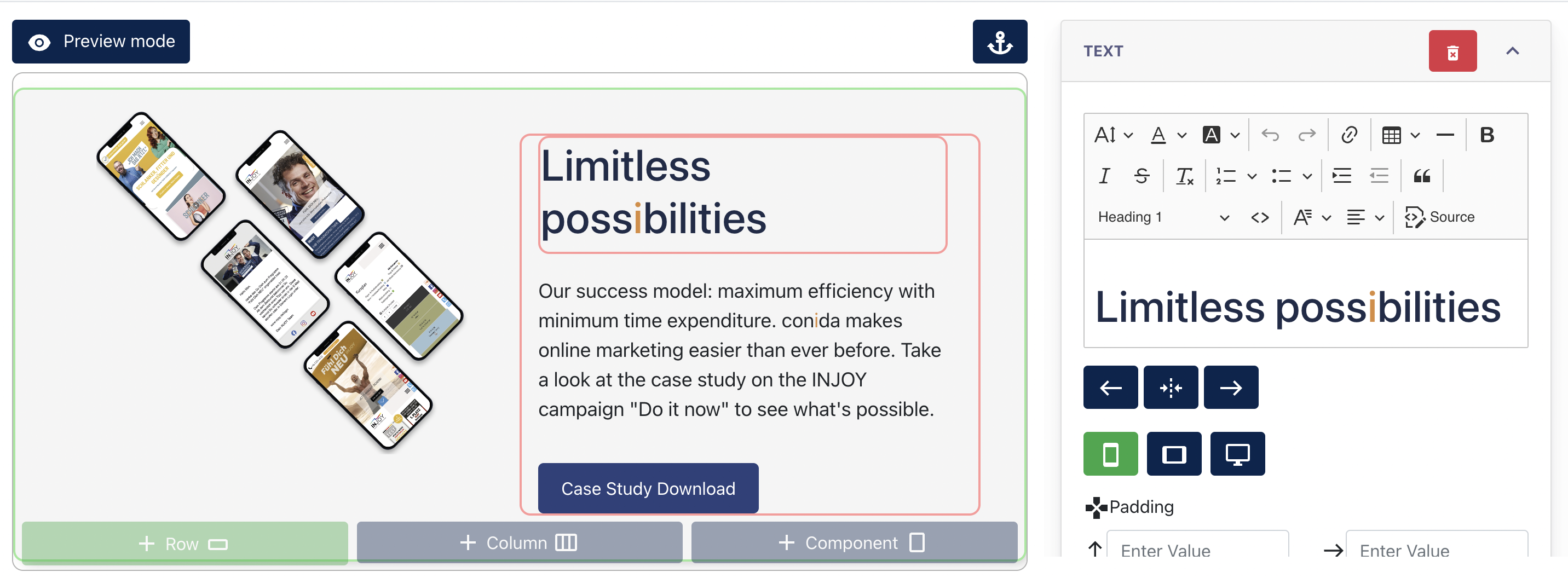
- Text and image content
- Row and column spacing (padding and margin)
- Background colours
- Layout settings
- Component-specific settings
The available editing tools may vary depending on the selected section template and components used.
Additional content can be added to the section using the following options:
- + Row – Add a new row to the section.
- + Column – Add a new column within a row.
- + Component – Add content components such as text, images, buttons, and other available elements.
2. Introducing the Blank Section Editor
The Blank Section Editor allows Center Administrators to build a section from an empty canvas instead of using a predefined section template.
To create a blank section:
1. Click the "+" button.
2. In the Select Section dialog, click "Create Section".
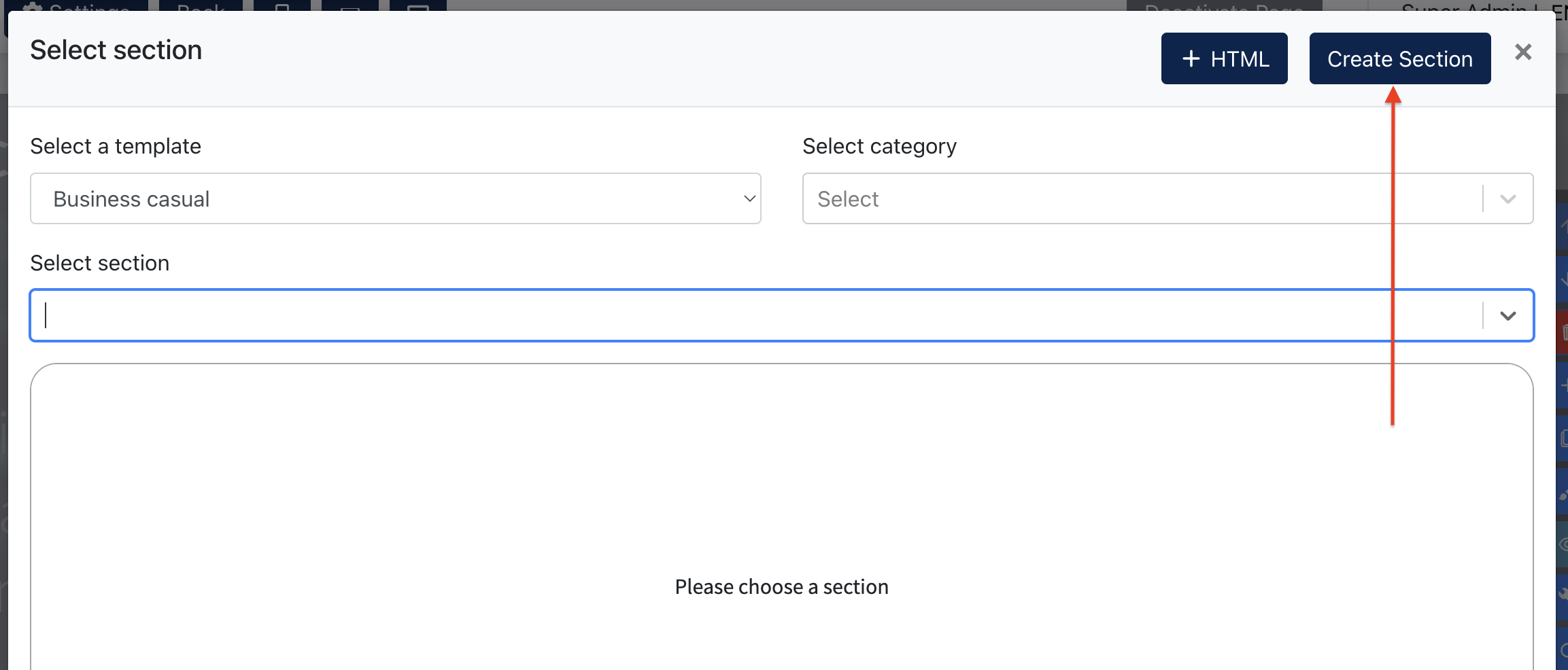
Screenshot : Blank Section Editor
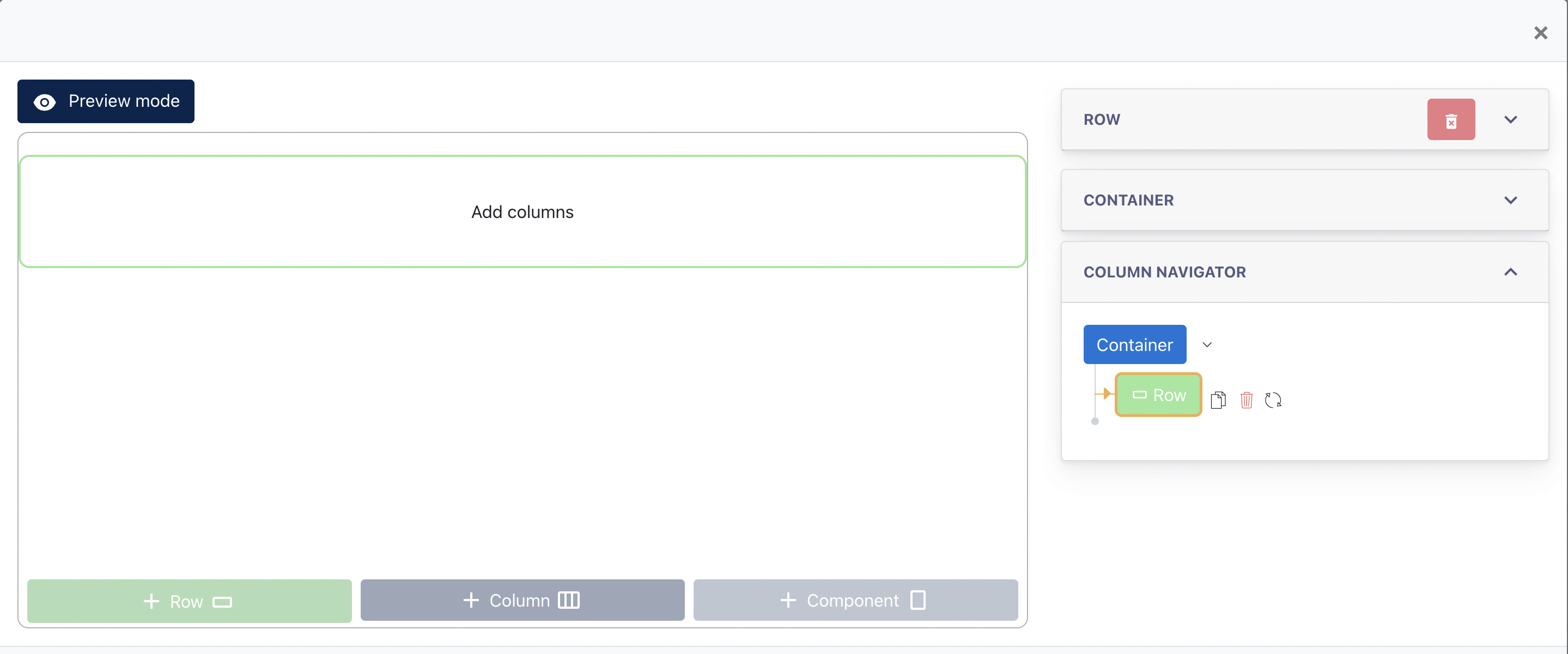
2.1 Understanding the Editor Structure
The Blank Section Editor is built using a hierarchical structure. Understanding these building blocks will help administrators create and manage page content more effectively.
Container
A Container is the outer wrapper of a section. It defines the overall width, spacing, background, and layout settings of the section.Row
A Row is used to organize content horizontally within a container. A section may contain one or multiple rows.Column
A Column is created within a row and defines how content is arranged across the page. Administrators can choose different column widths to create various layouts.Component
A Component is the actual content element displayed on the website. Examples include Text, Image, Video, Button, Site Form, and other available content elements.
The structure of the editor follows the hierarchy below:
Container
→ Row
→ Column
→ Component
2.2 Creating Content
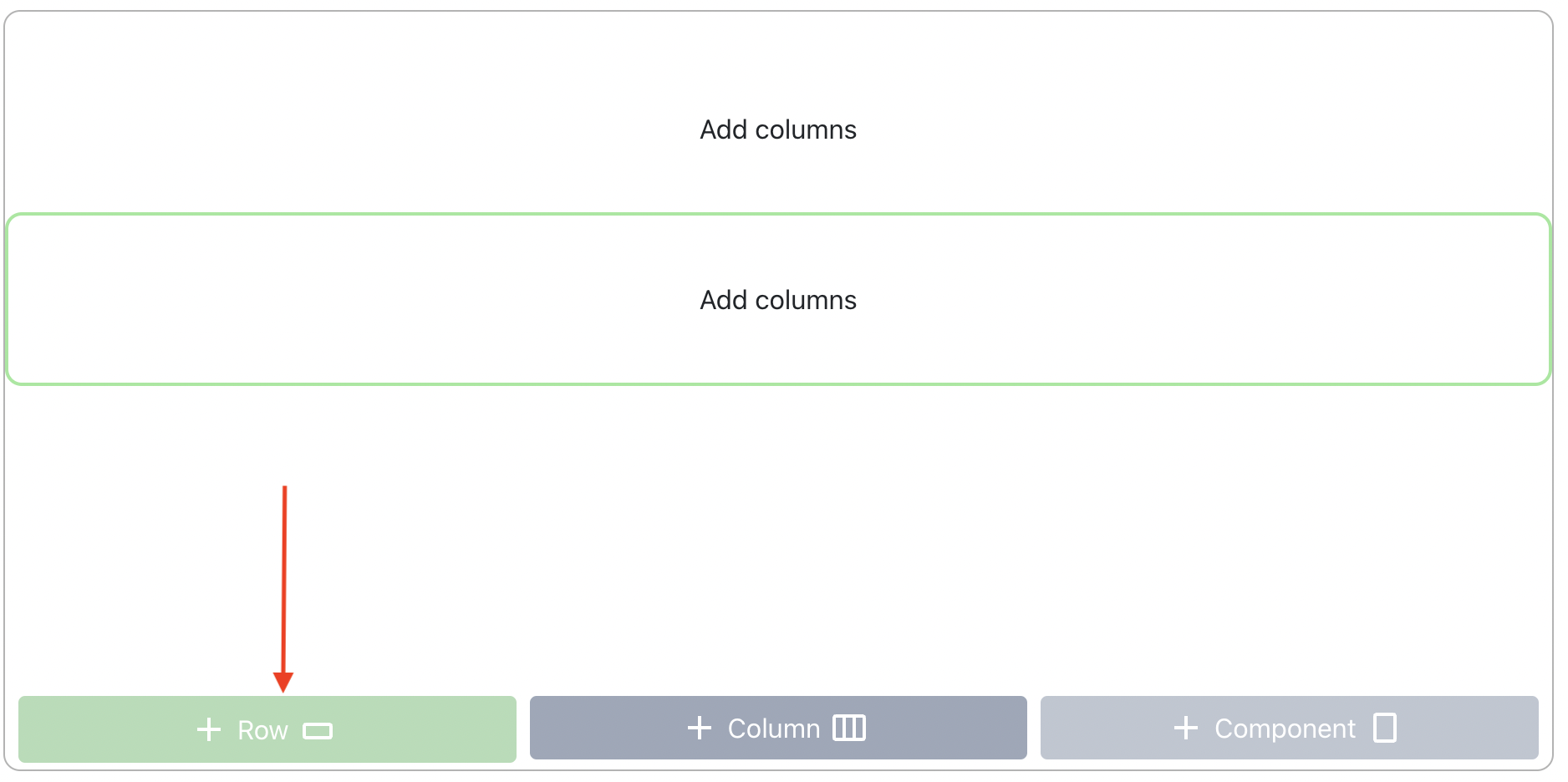
Step 1 – Add a Row
Create a row to define the layout structure of the section.
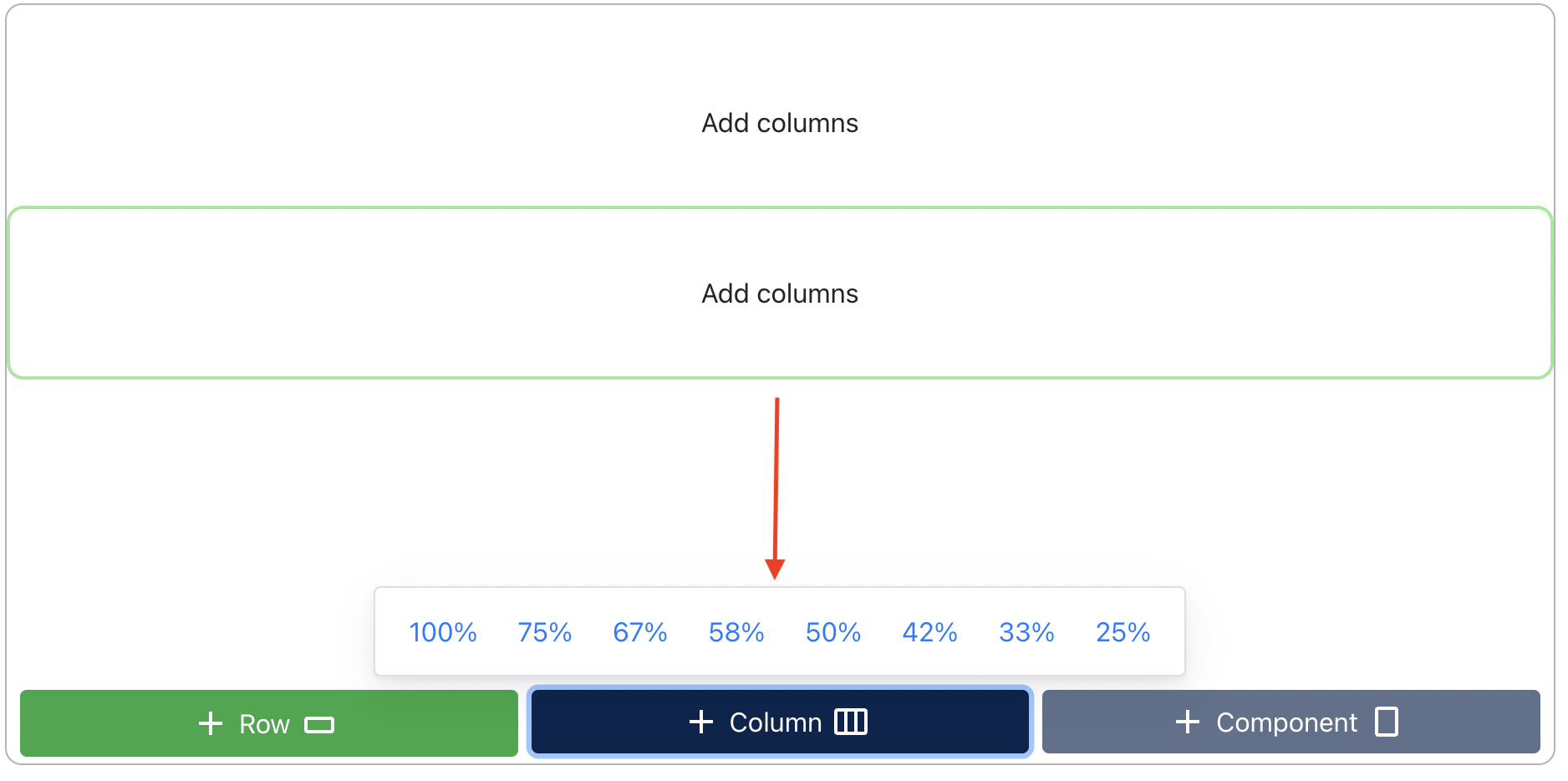
Step 2 – Define Column Width
Add one or more columns and select the desired width percentage for each column.
Step 3 – Add Components
Insert content components into the selected column.
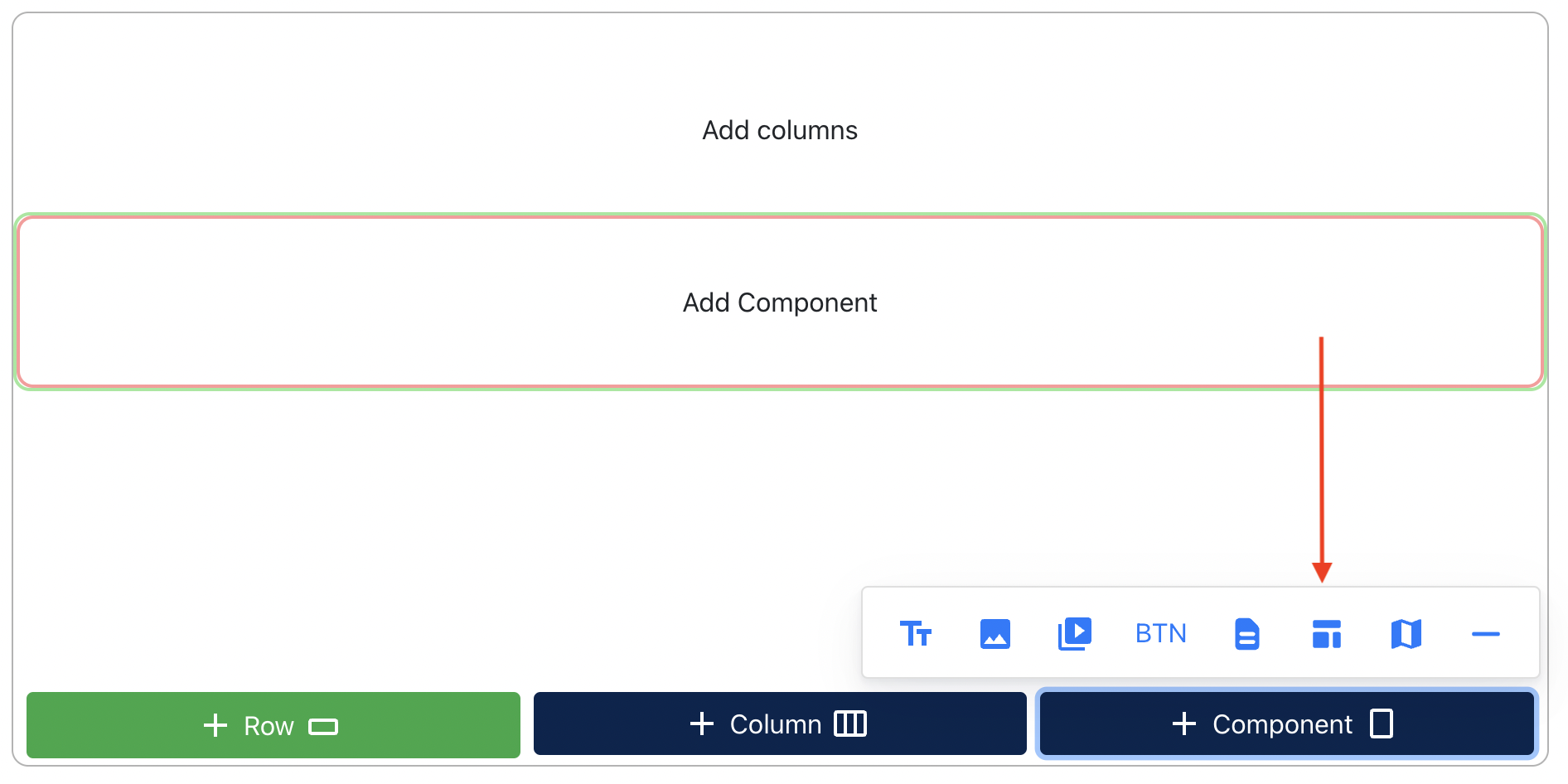
2.3 Available Components
The following components are available:
- Text
- Image
- Video
- Button
- Site form
- Template component*
- Map/embed code
- Divider
Template Components are pre-designed content elements created for more complex layouts and designs. They allow administrators to quickly insert reusable design elements without having to build them manually within the editor.
Editing Components
After a component is added, its settings are displayed in the right-side editor panel. The available settings vary depending on the selected component.
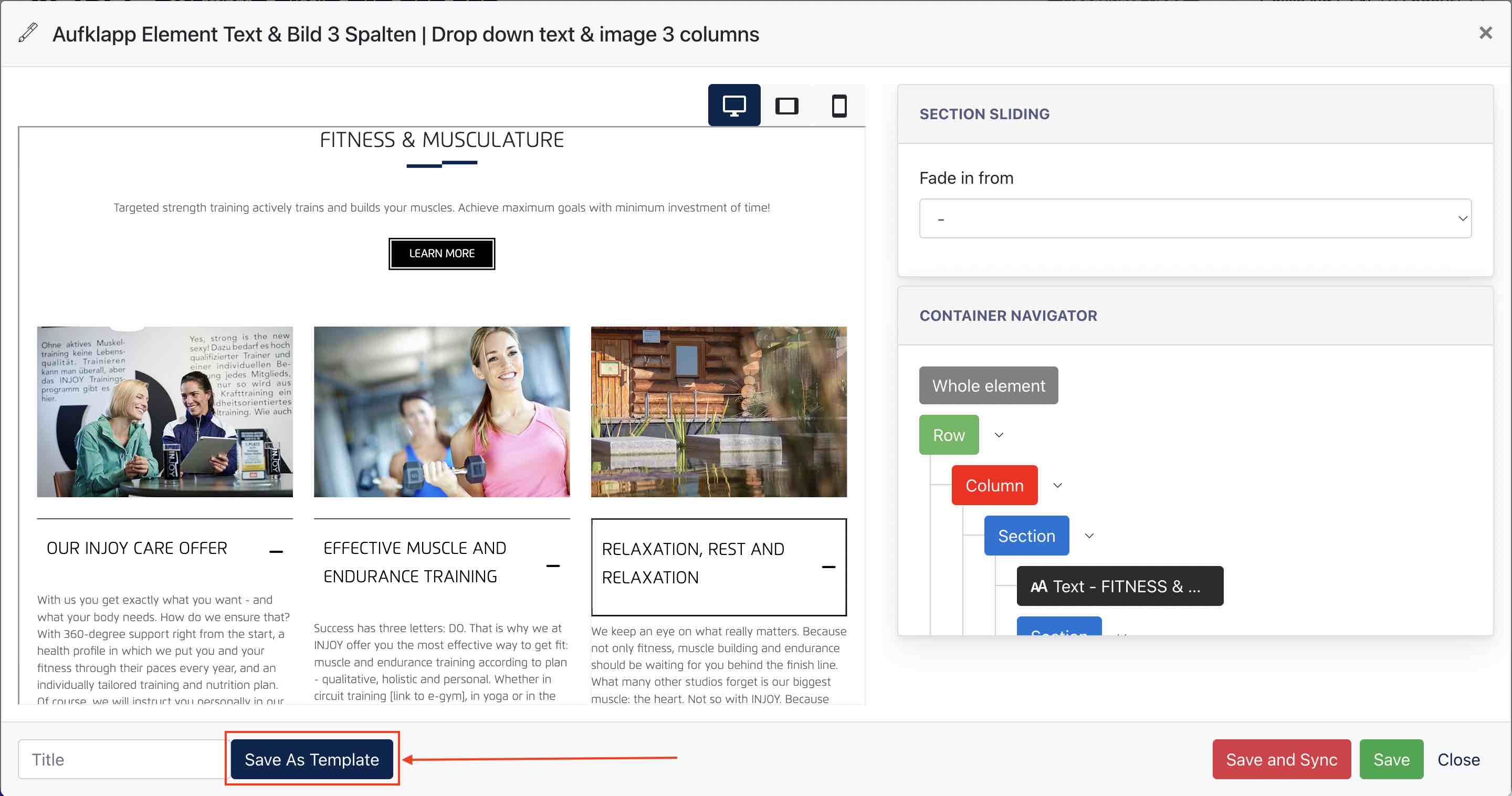
2.4 Save as Template
The Save as Template function allows administrators to save a section for future reuse.
Templates can be created from:
-
A newly created section in the Blank Section Editor.
-
An existing section that has been edited and customized.
To save a section as a template:
-
Create or edit a section.
-
Enter a template title.
-
Click Save as Template.
The template will be stored in the template library and can be reused when creating new pages or sections.
Using a Saved Template
To apply a previously saved template:
-
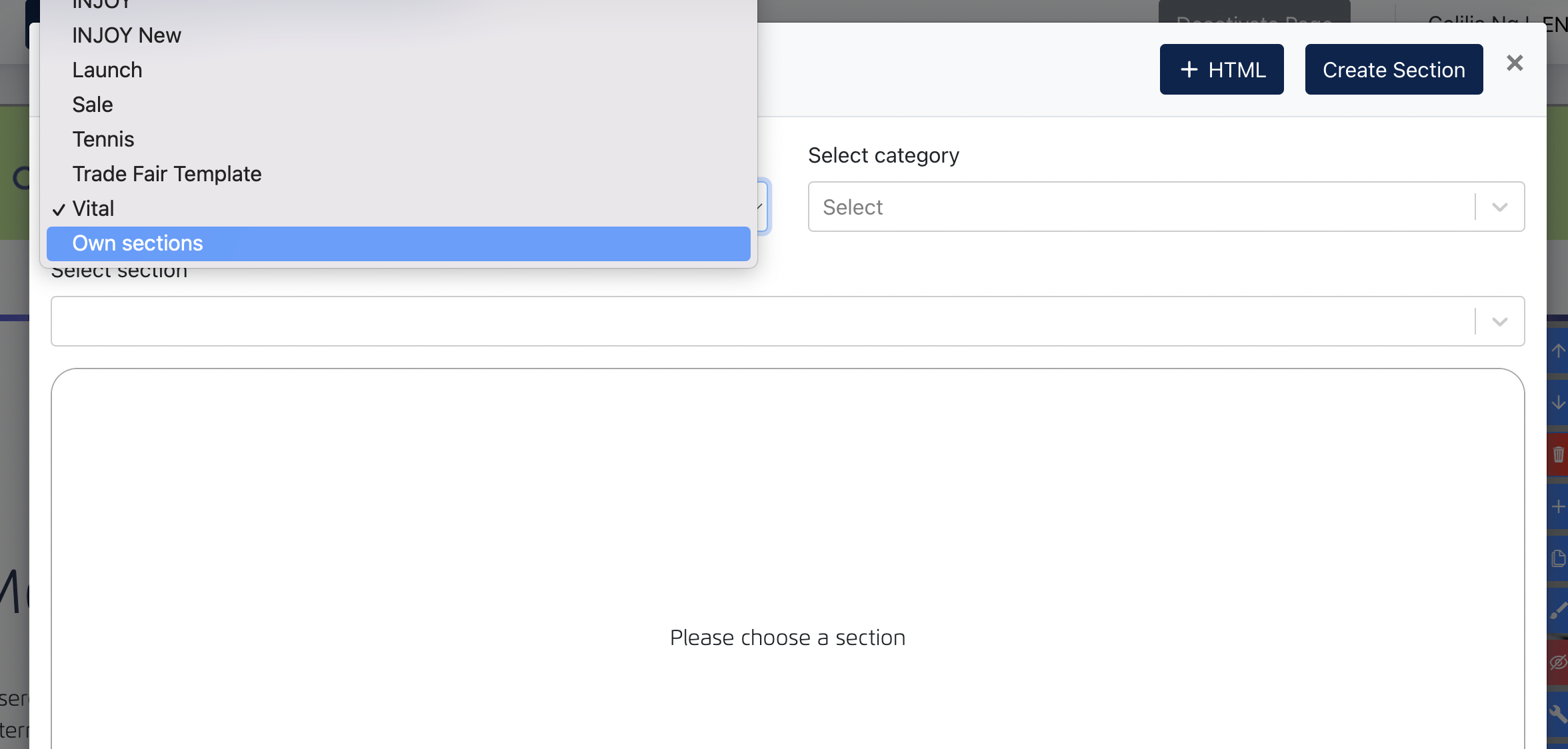
Click the Add (+) button within the Section Editor.
-
Select Own Sections from the template dropdown.
-
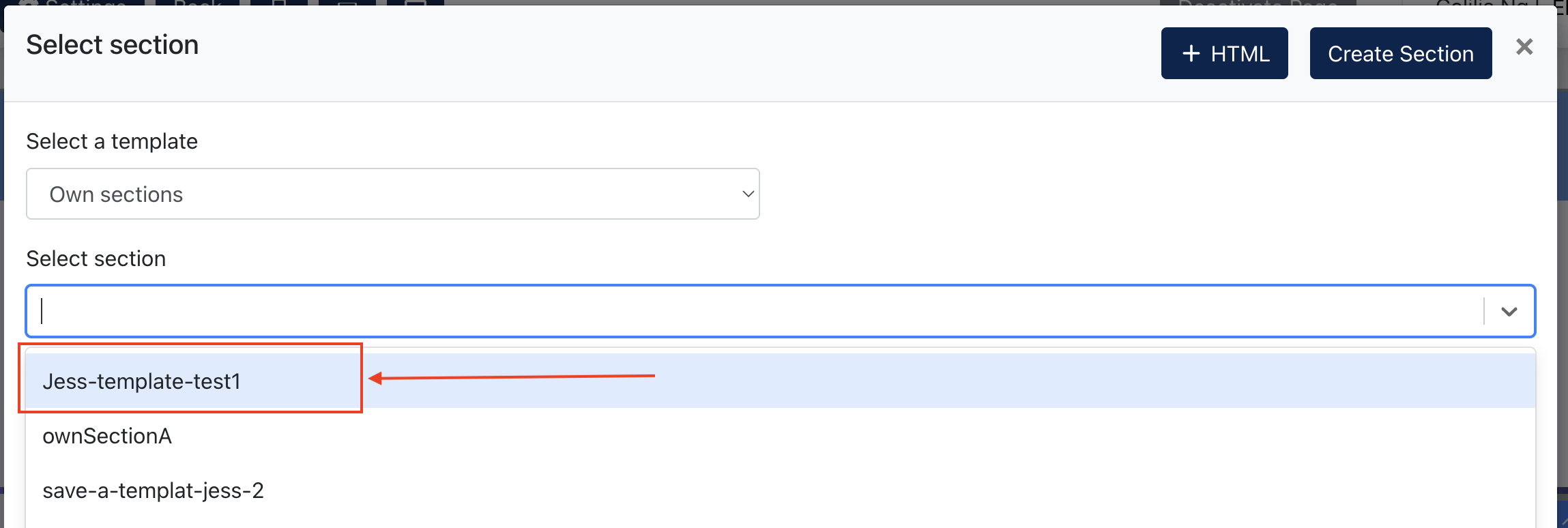
Choose the desired template from the list.
-
Apply the template to the page.
The selected template will be inserted as a new section.
3. Introducing Header Editor
A website header is the top section of a web page, typically visible across all pages of a website. It serves as a key area for branding, navigation, and essential information.
Elements in a conida Website Header:
- Logo: Represents the brand and often links to the homepage.
- Navigation Menu: Links to important pages like Home, About, Services, Contact, etc.
- Call-to-Action (CTA): Buttons like "Log in", "Shop Now"
- Contact Information: Phone number, email, address and social media icons.
- Language Switcher: On multilingual sites, this lets users select a preferred language.
Following are some examples of conida website header:



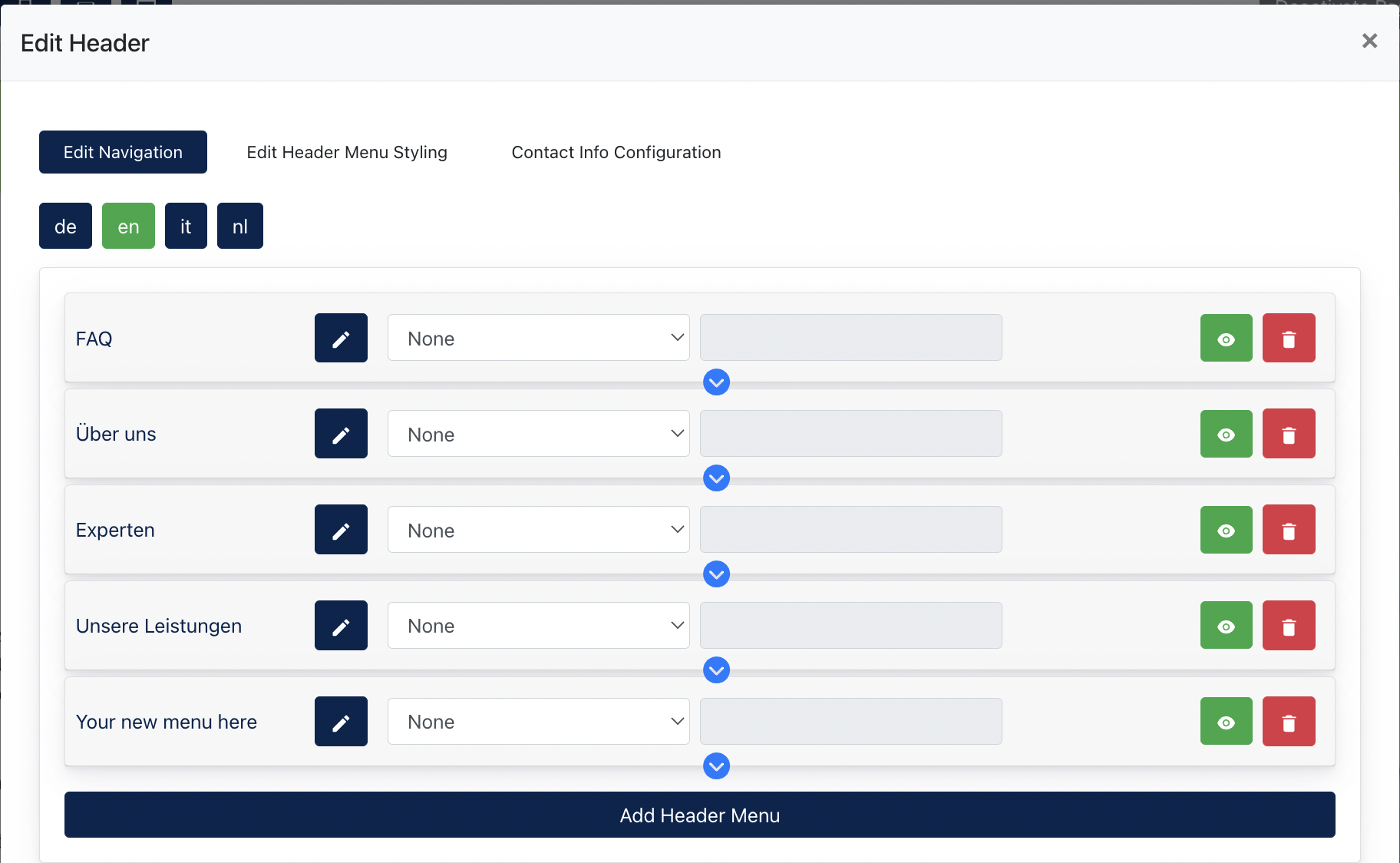
3.1 Setting up Navigation Menu
Go to Site Content > Header
Under 'Edit Header'
3.2 Setting up menu styling
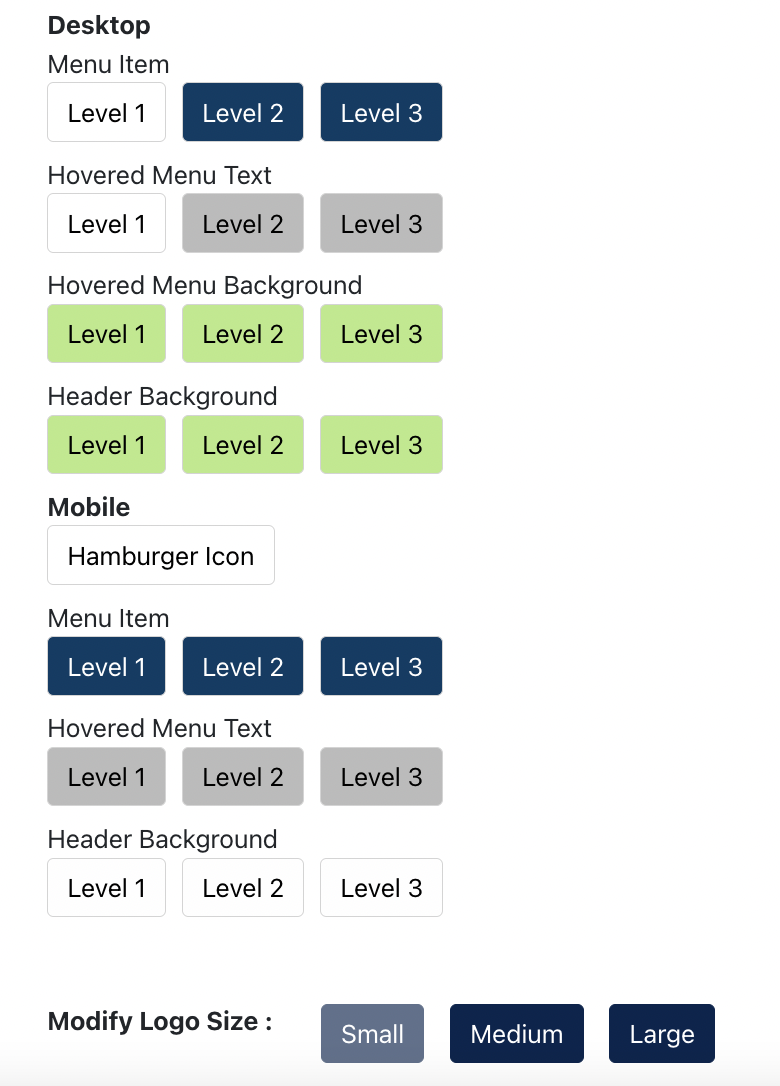
On the same modal, go to "Edit Menu Header Styling"
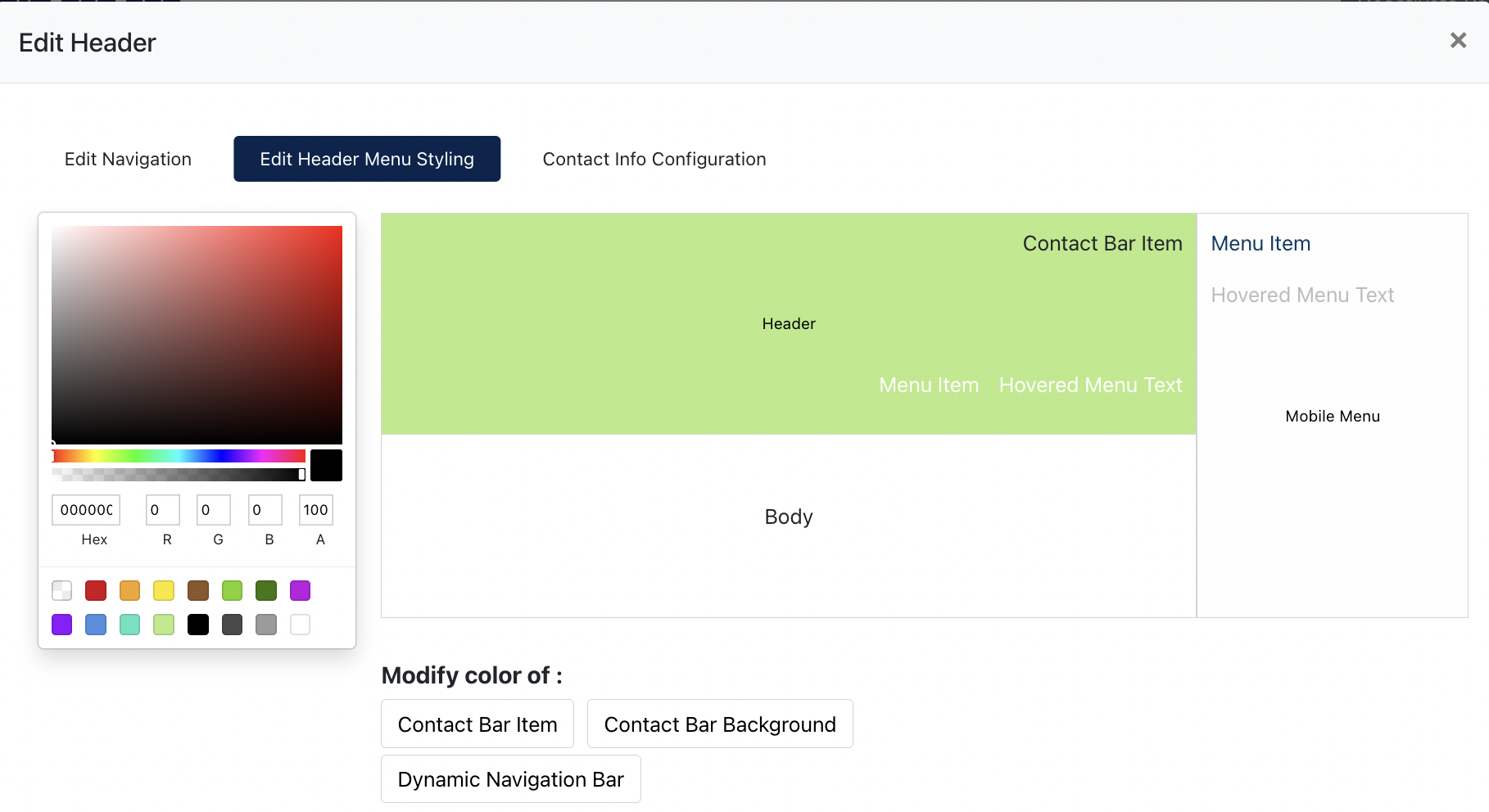
Here, Center Admin is allowed to configured the following :
3.3 Setting up contact info
On the same modal, clicks "Contact Info Configuration"
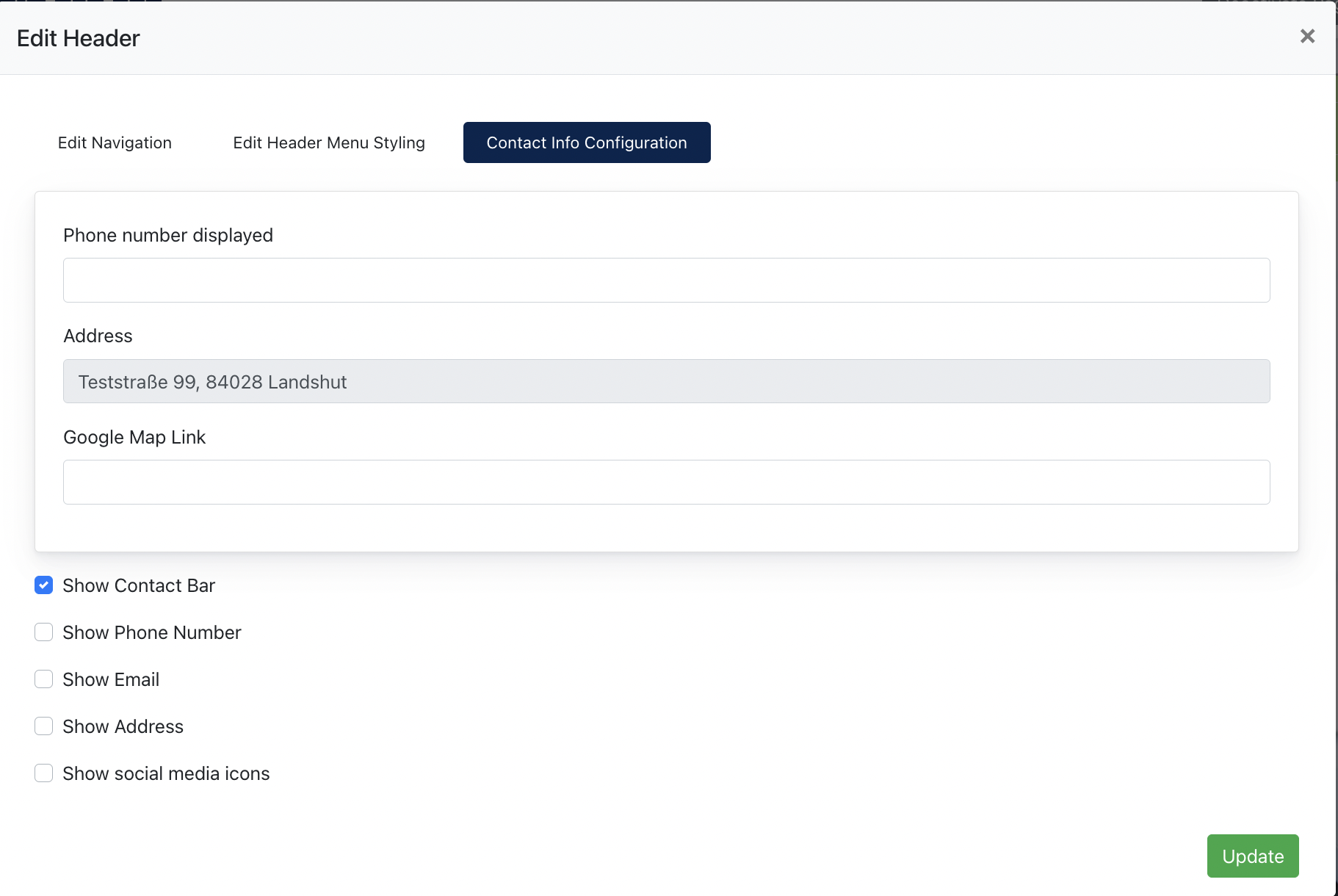
On this modal, Center Admin can update the following data :
- Phone number, address and google map link displayed on the contact info bar
- Tick the checkboxes to configure their visibility on the website.
4. Introducing Footer Editor
Go to Site Content > Footer
conida website's footer configuration as below :
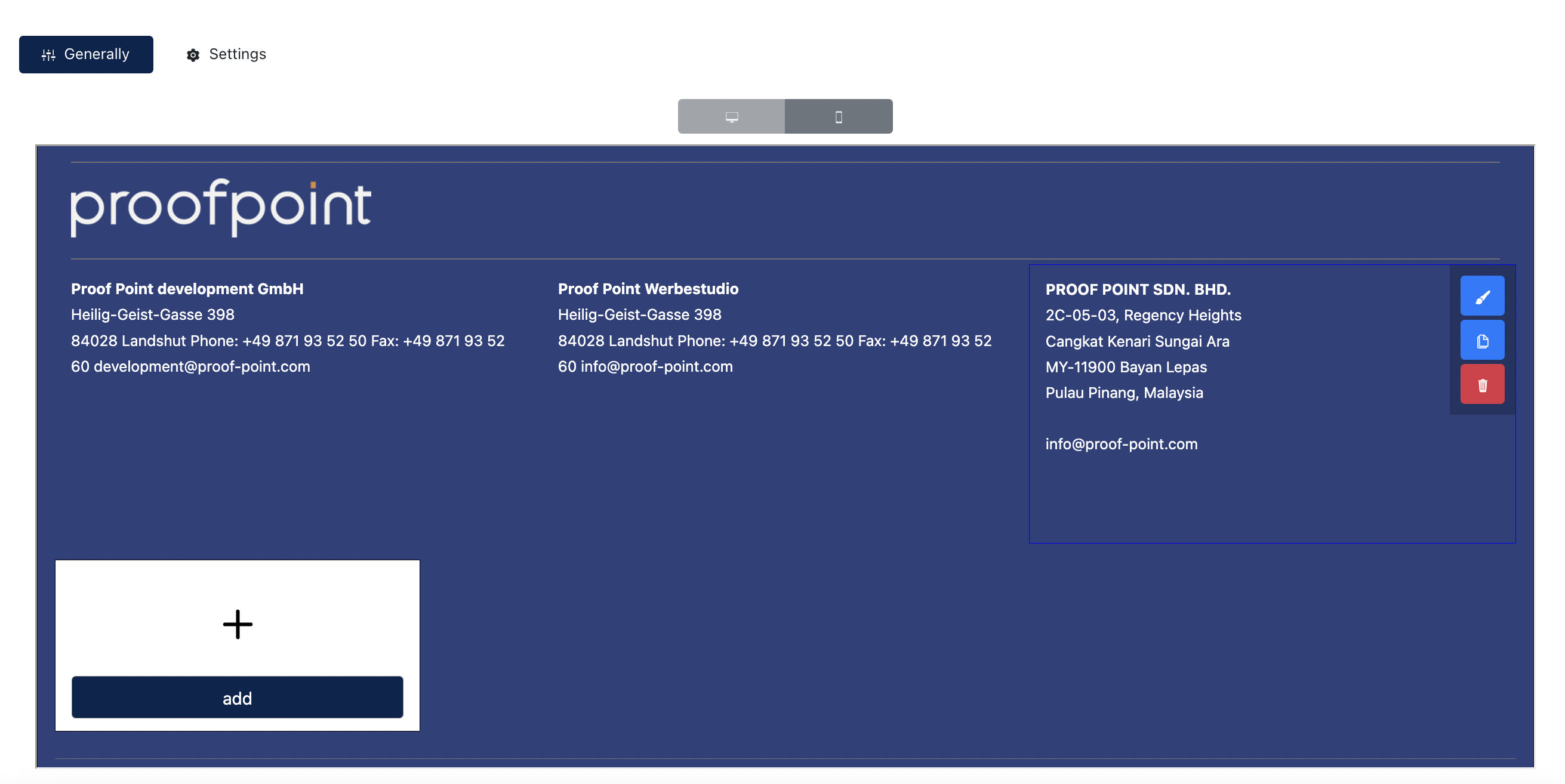
4.1 General Tab
Under "General" tab, user can add footer components using the " + " button.
After clicking "+", this modal will pop up :
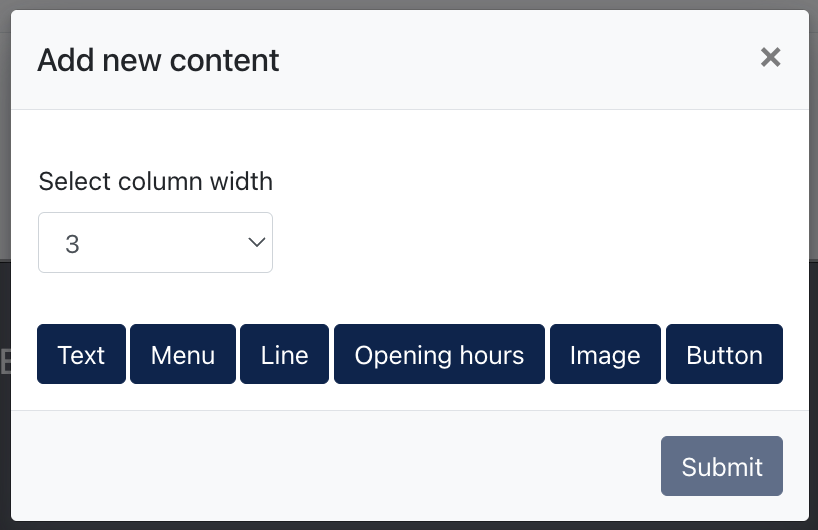
Then Center Admin may configure the footer by adding the components which required. Each component can be further configured during setting up.
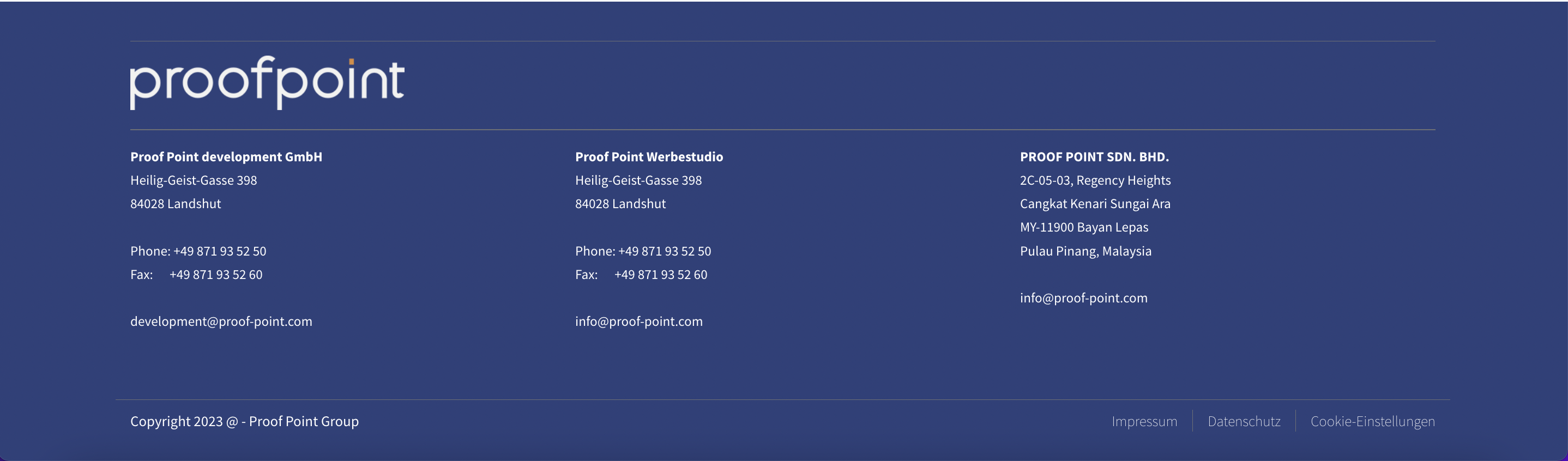
Screenshot below show some examples of website footer created by conida footer editor:

4.2 Setting Tab
Under this tab, Center Admin can configure the color for the footer elements :
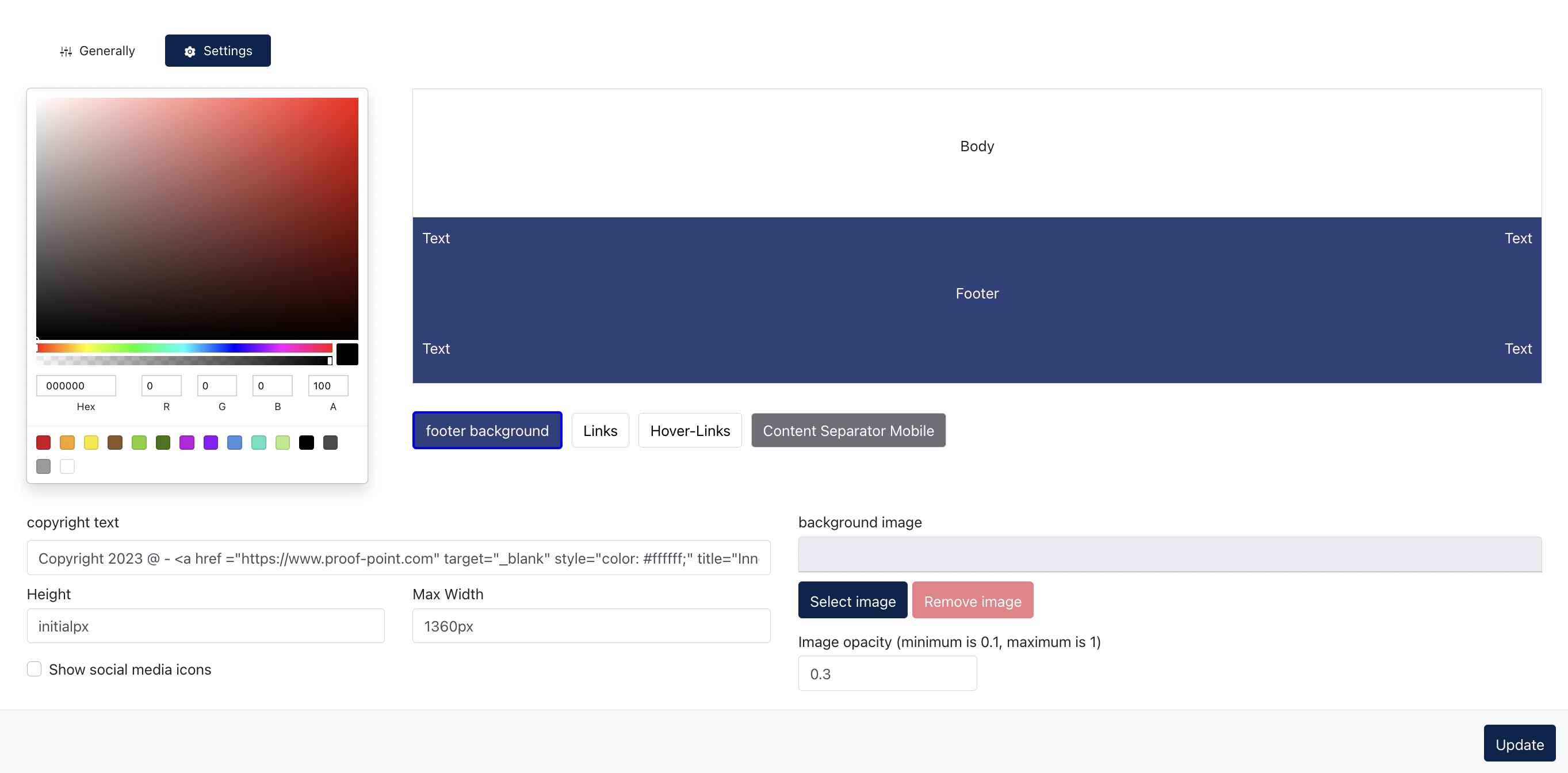
- footer background
- links
- hover-links
- Content Separator Mobile : this refers to this lines on the mobile version's footer. Center admin can configure its color here.
- Background image : the footer can have background image if an image is uploaded here.
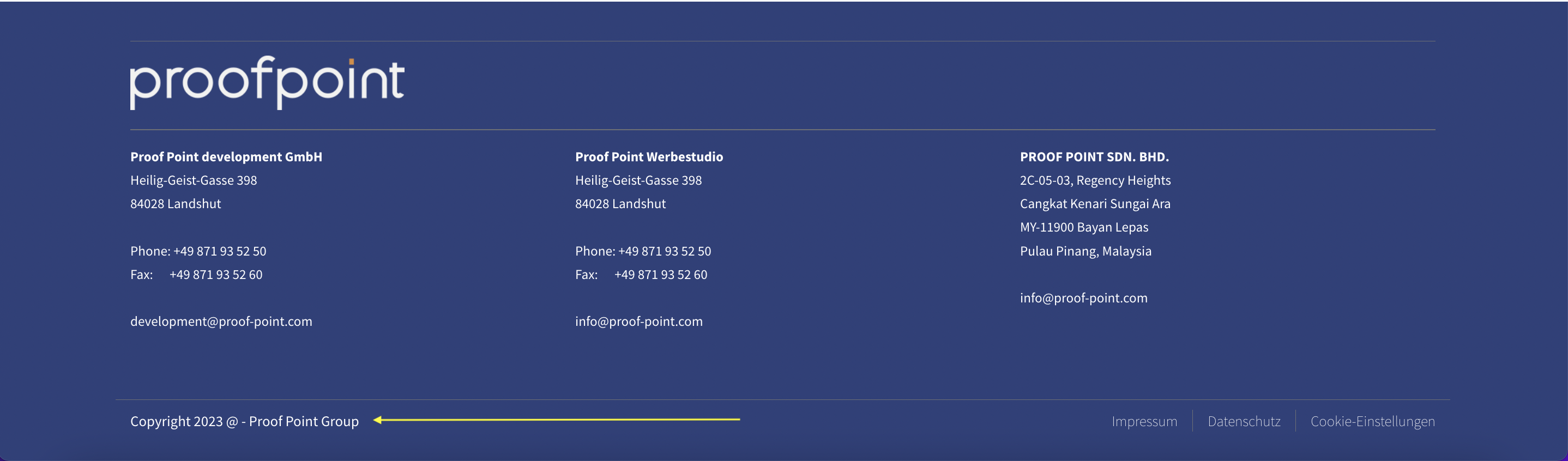
- Copyright text : copyright text appeared under the bottom left of the page. Center admin may configure the text here.
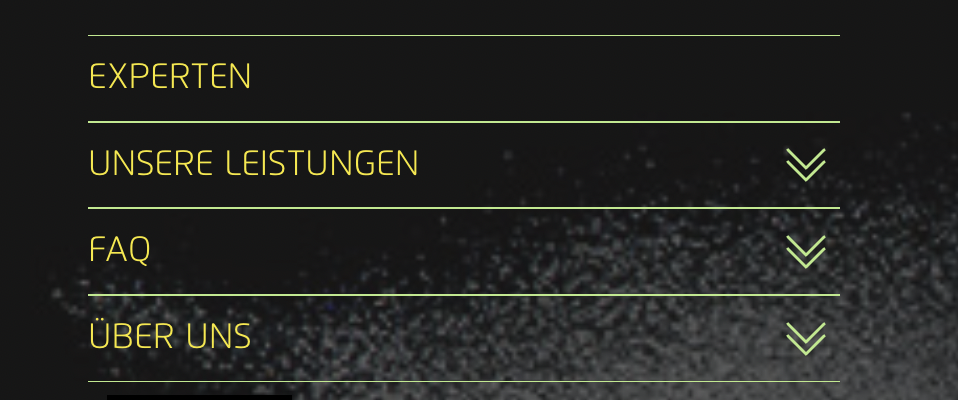
- Show social media icon: if this checkbox is ticked, the social media icon configured under Center Setting will be displayed at the bottom of the page. For example :

5. Introducing Scroll Buttons
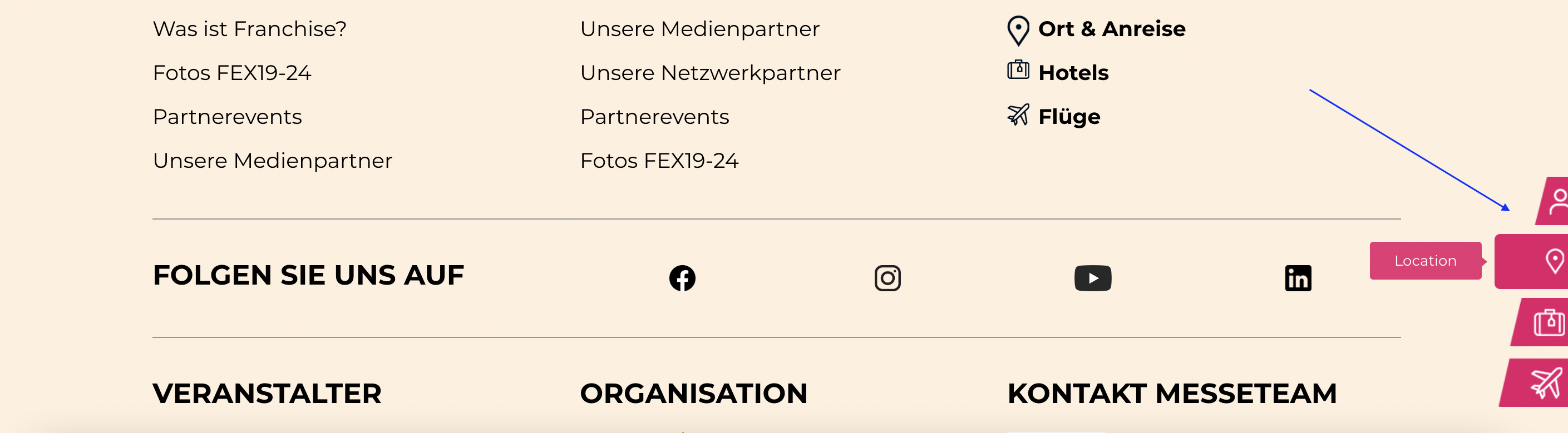
An example of scroll buttons:
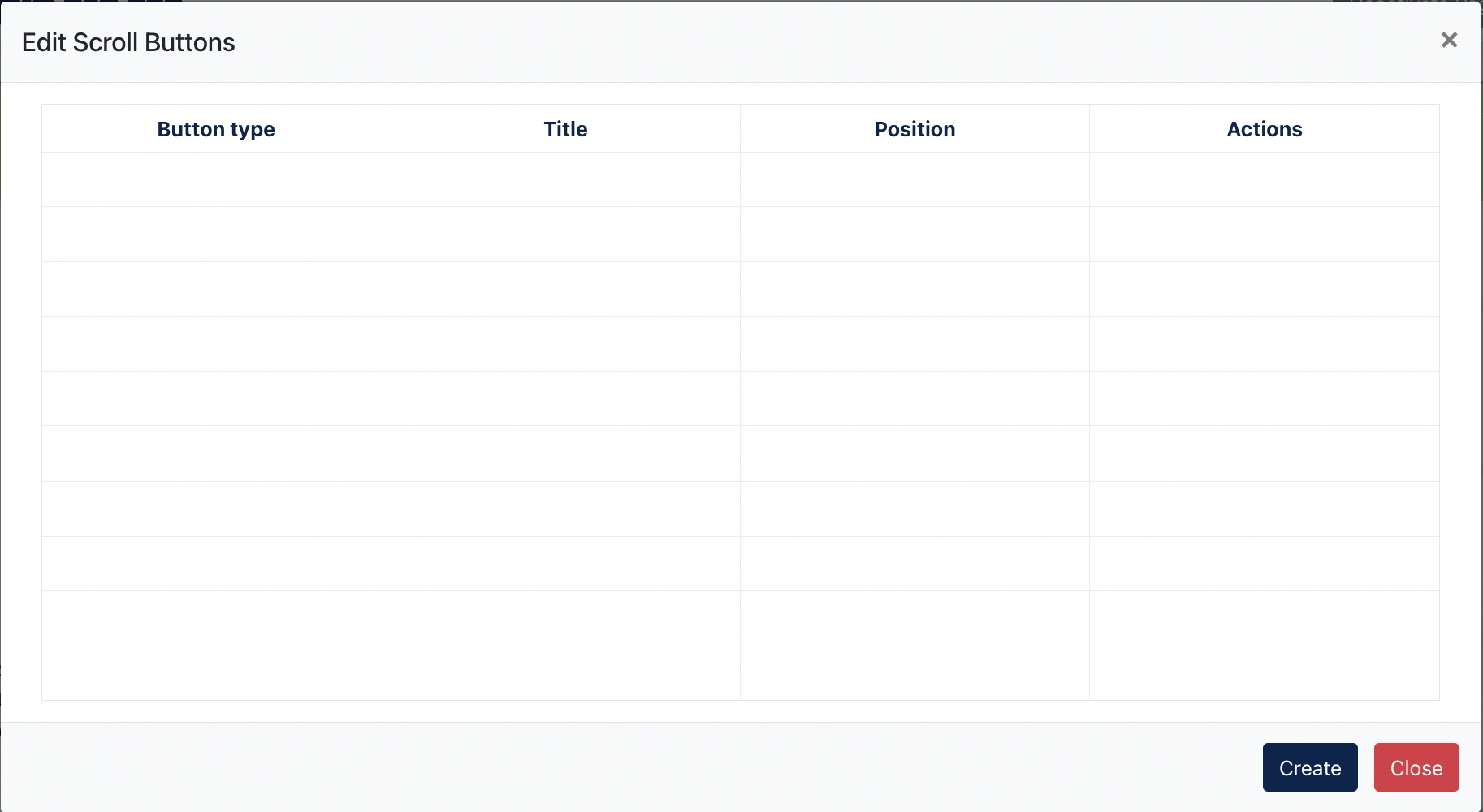
Click on Site Content > Scroll Button, and this modal will pop up.
5.1 Create Scroll Button
Click "Create" Button.
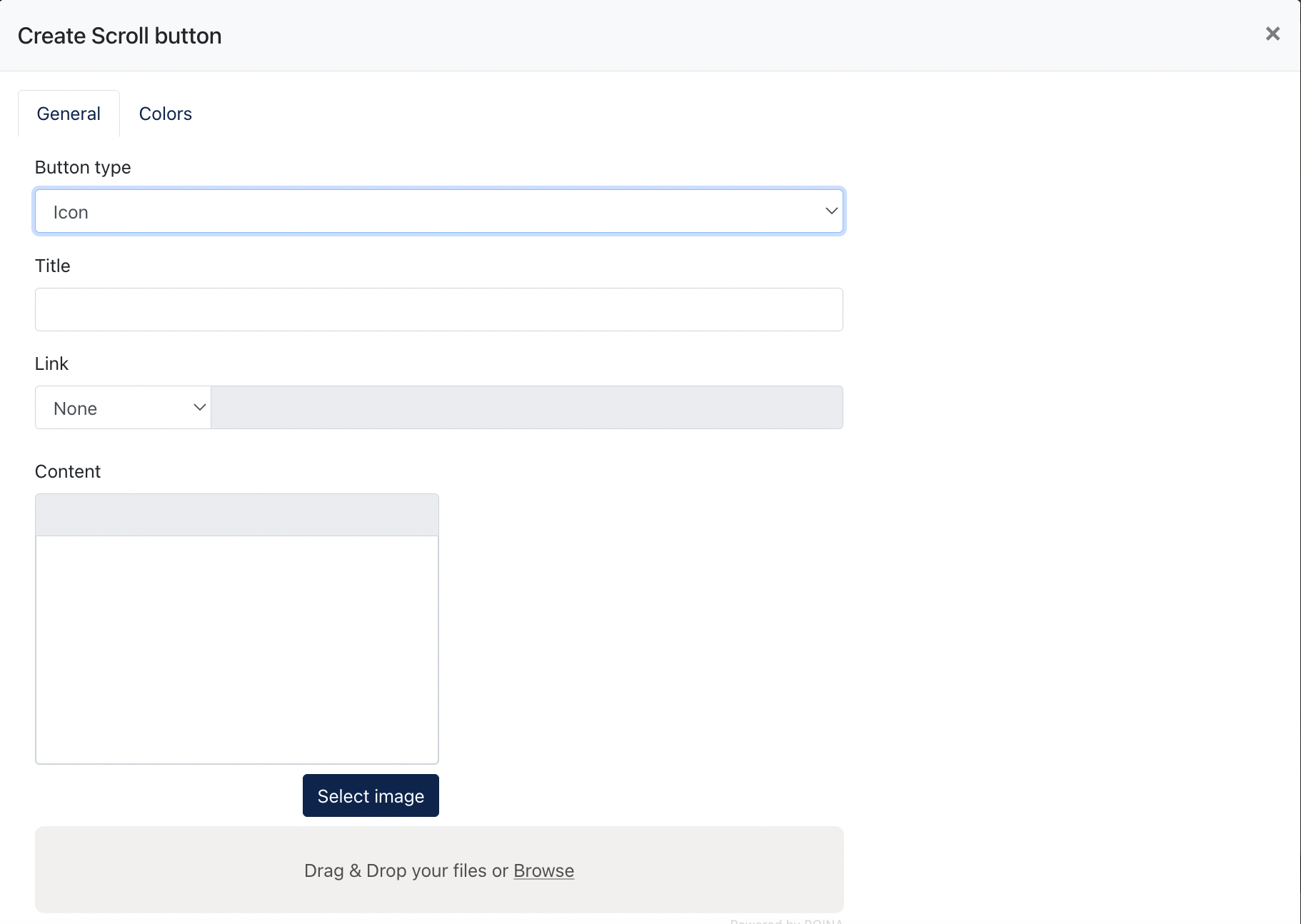
Under [ General ] tab:
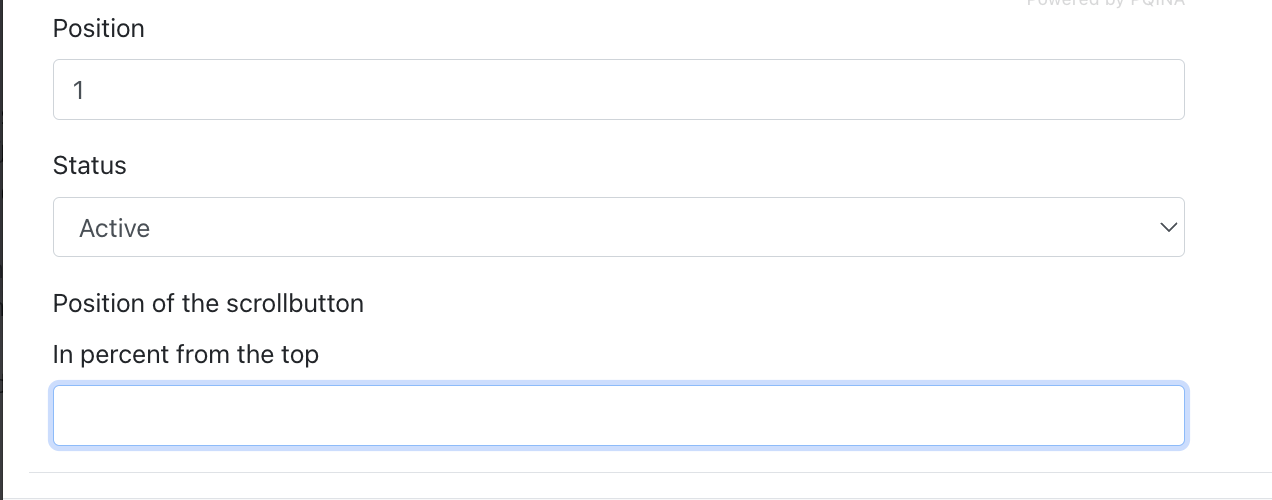
- Position - set the order of scroll button. If '1' is set, meaning it will be the first button from top.
- Status - Active display the button; inactive hide the button
- Position of the scroll button in percent from the top - Set a percentage for the scroll button to configure how far it is from the top of the page.
- Submit the form.
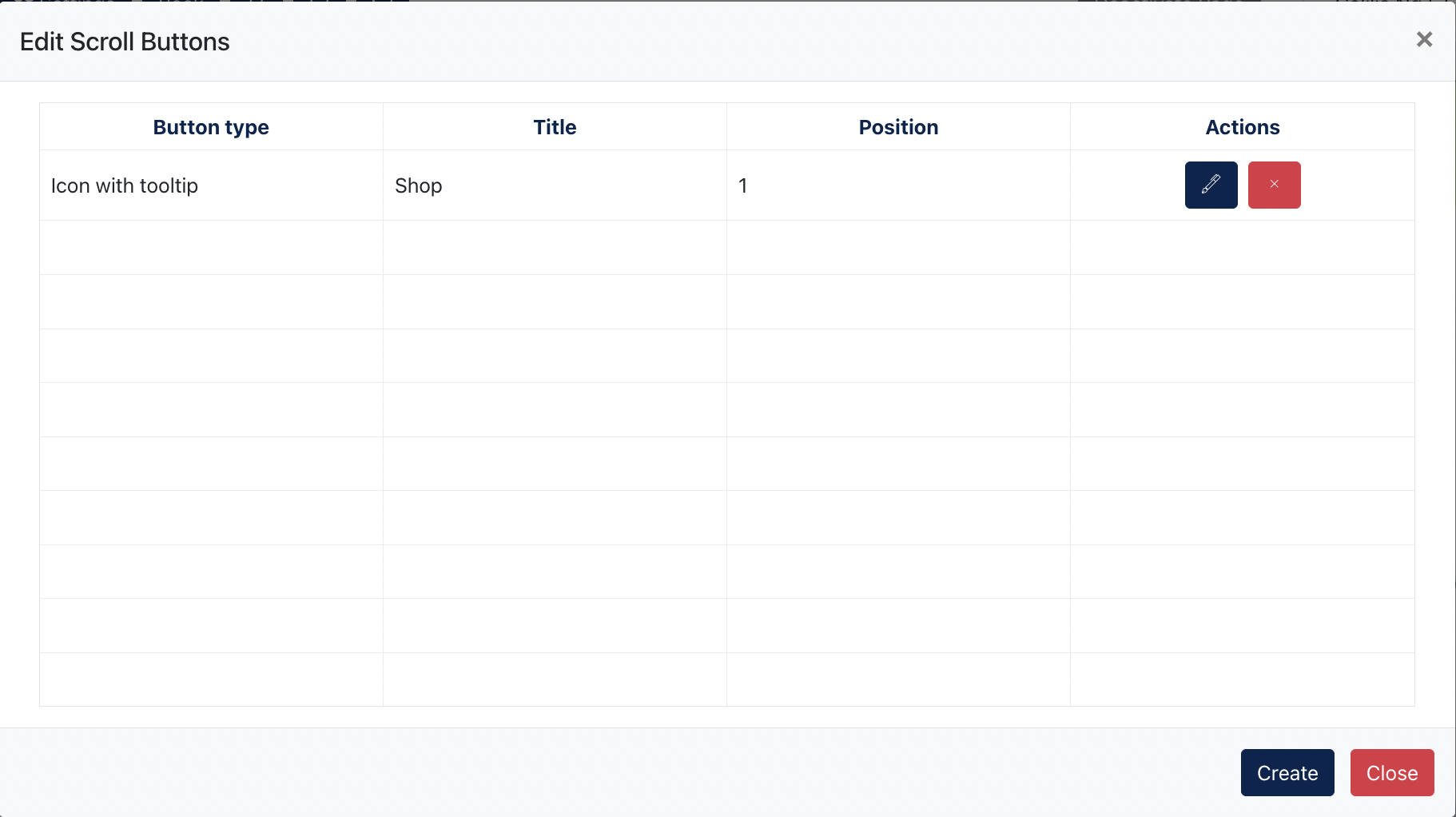
Under [ Color ] tab :
Center admin can set the properties of "Text Scroll button" via this tab :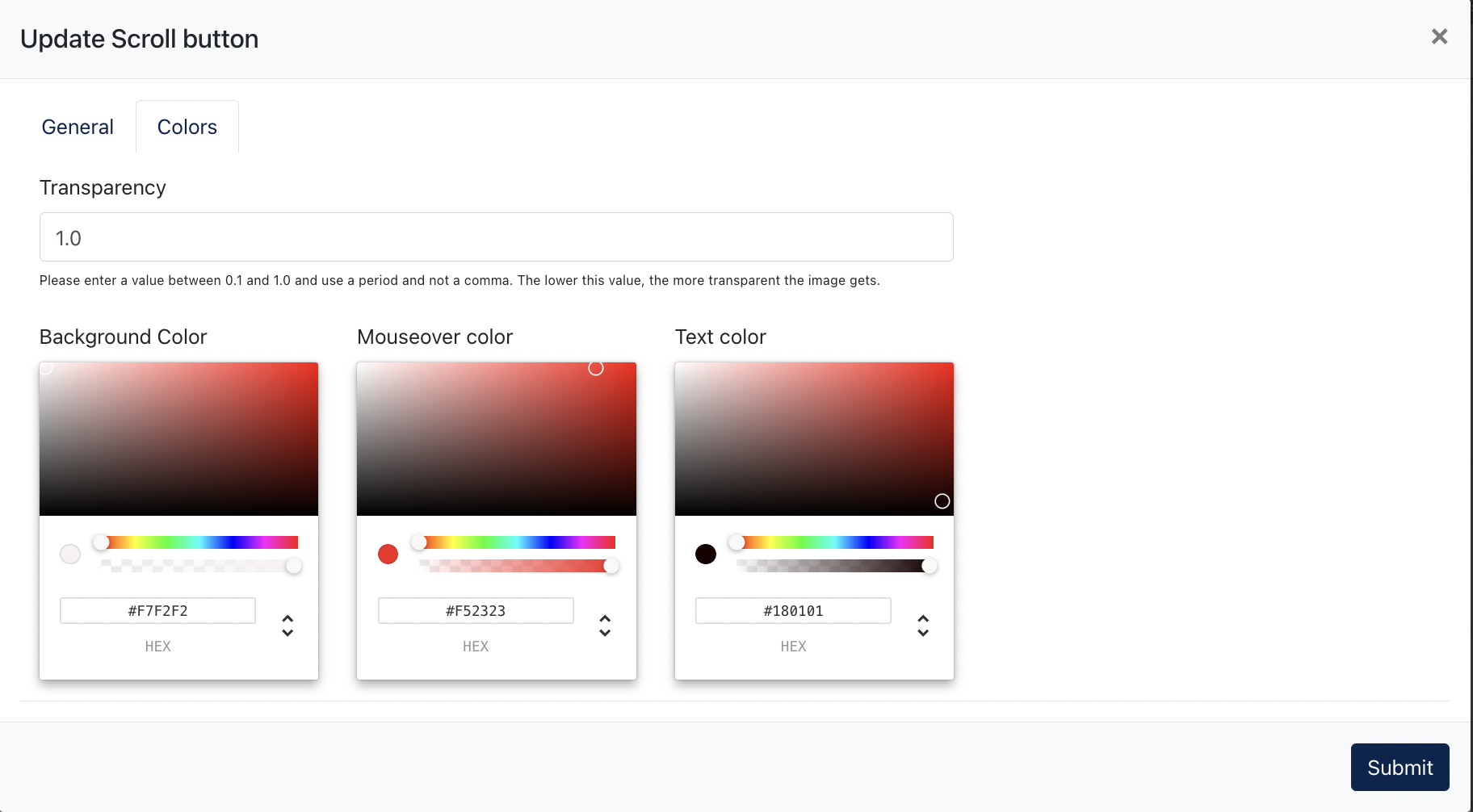
This is an example of the Text Scroll Button.
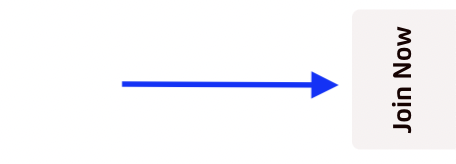
The configuration of a text scroll button will require the color setting of :
- Background color
- Mouseover color - color of background when mouseover
- Text color
6. Opening Hours
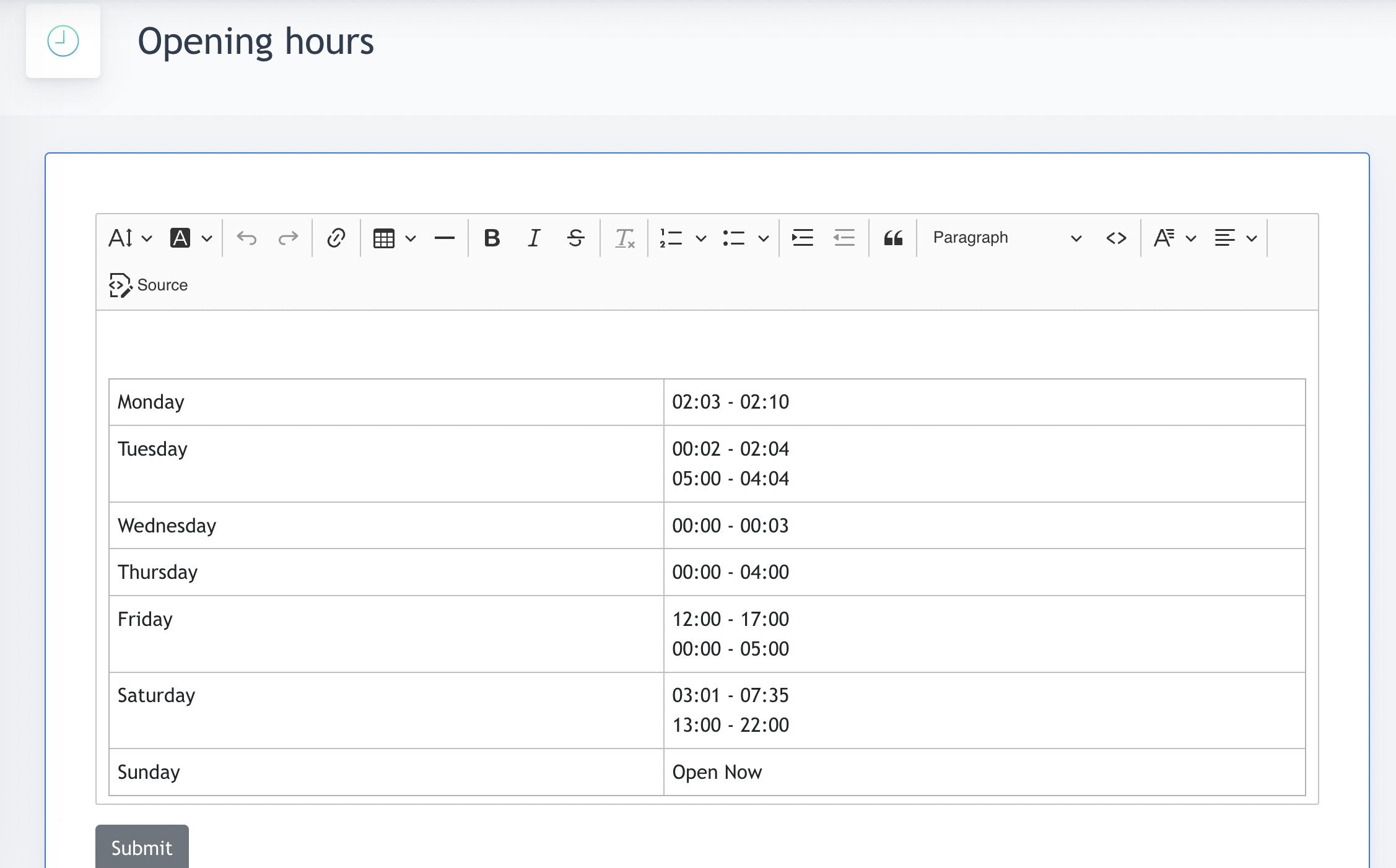
Under Site Content > Opening Hours, Center Admin may configure the opening hour using the text editor.
6.1 Opening Hour at Footer
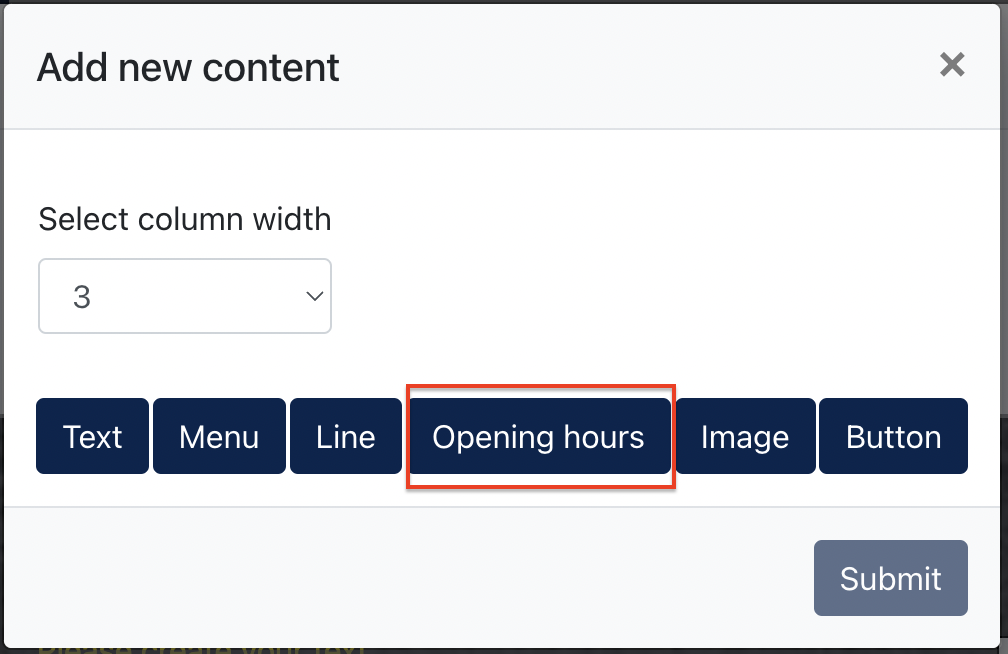
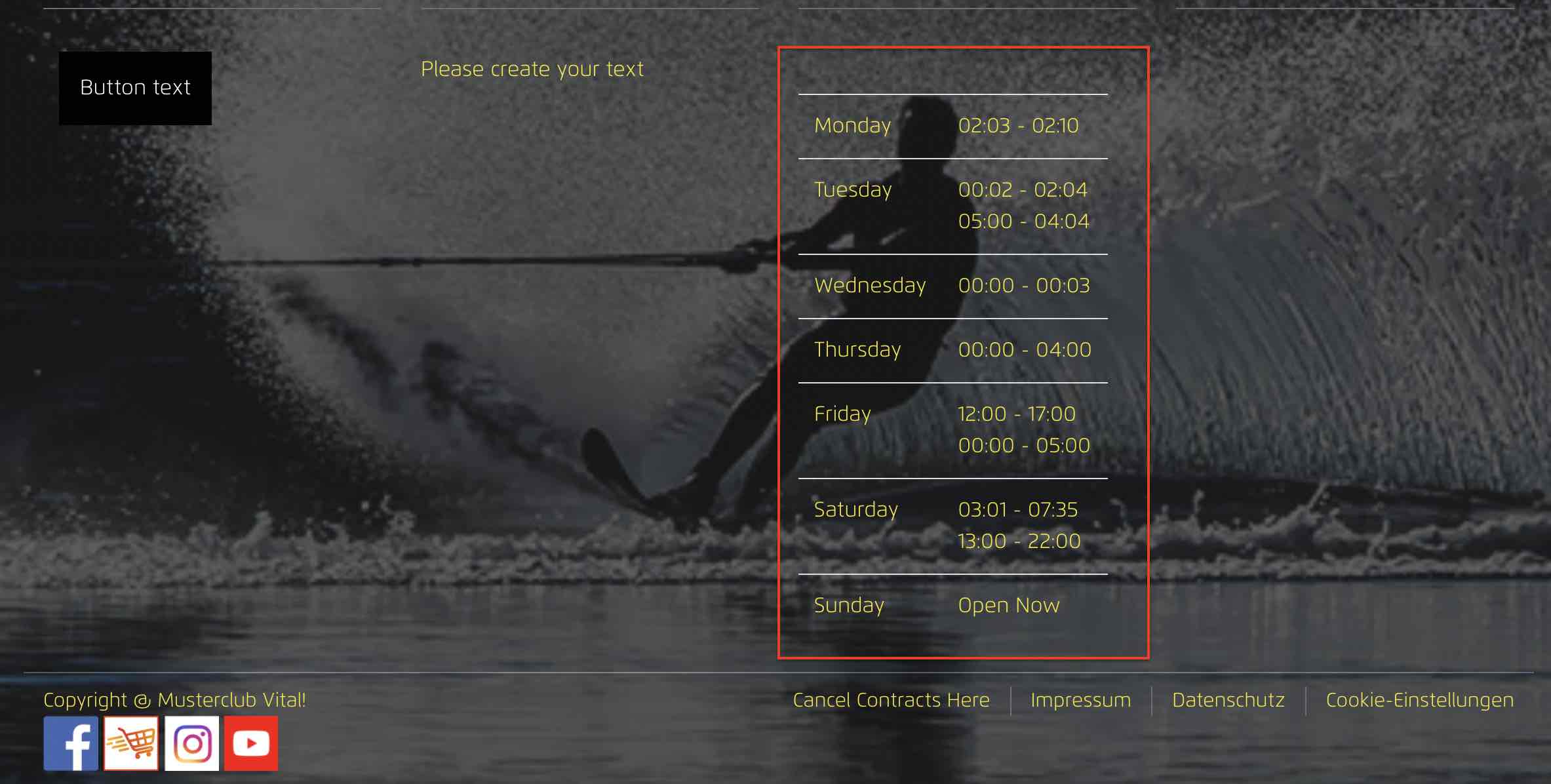
This opening hour will appear under Footer, if this component is added by Center Admin.
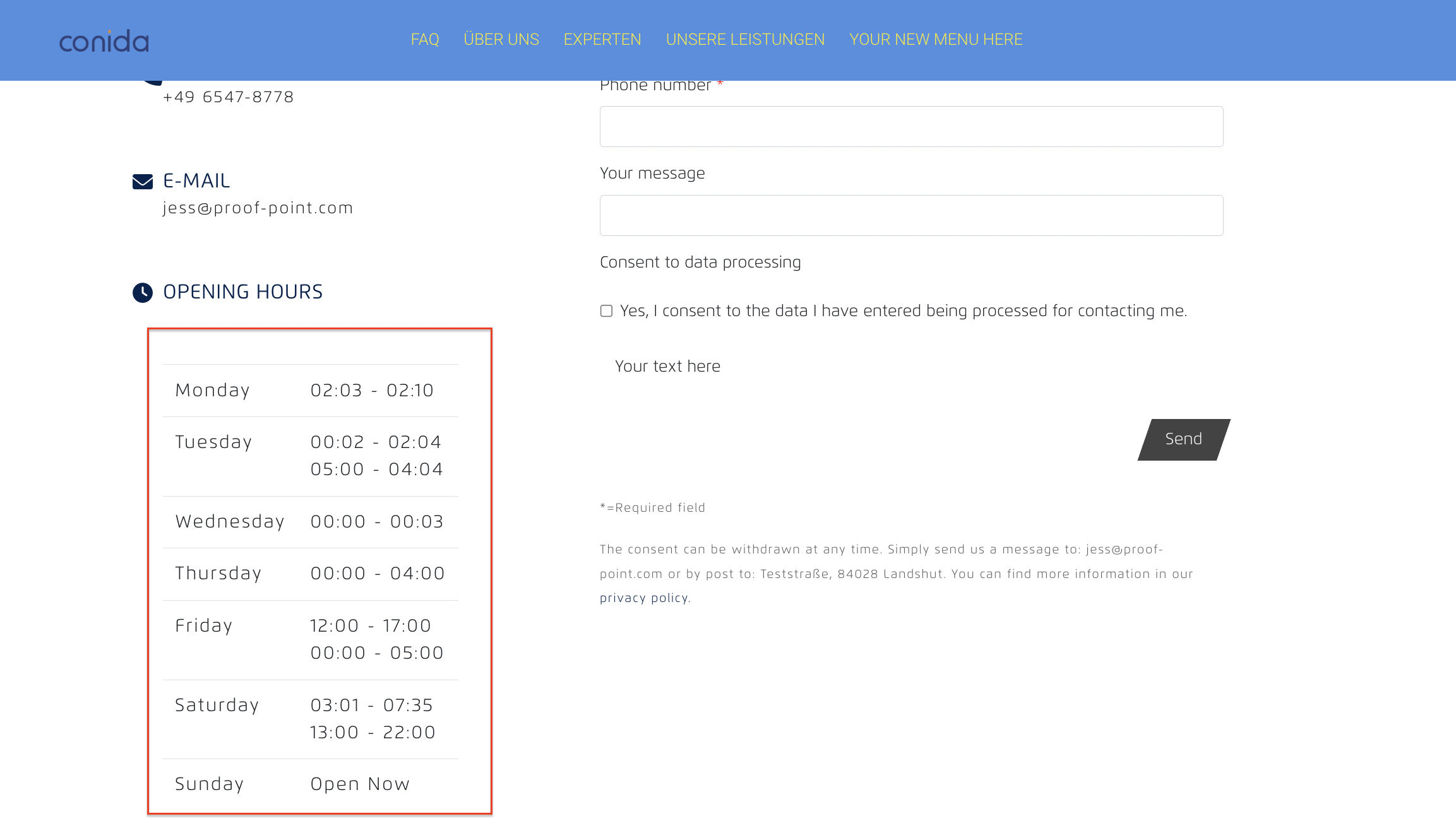
6.2 Opening Hour at Contact form
This opening hour will also be displayed under every conida's standard contact form's template :
- the end -