
Create Site Form
Overview
The Site Forms module allows Administrators to create and manage custom forms that can be embedded into website pages.
All submitted form data is stored in Ark and can be viewed from the Site Forms module.
Each form is built by combining different form components, allowing Administrators to create forms that meet their specific business requirements.
1. Site Form Listing
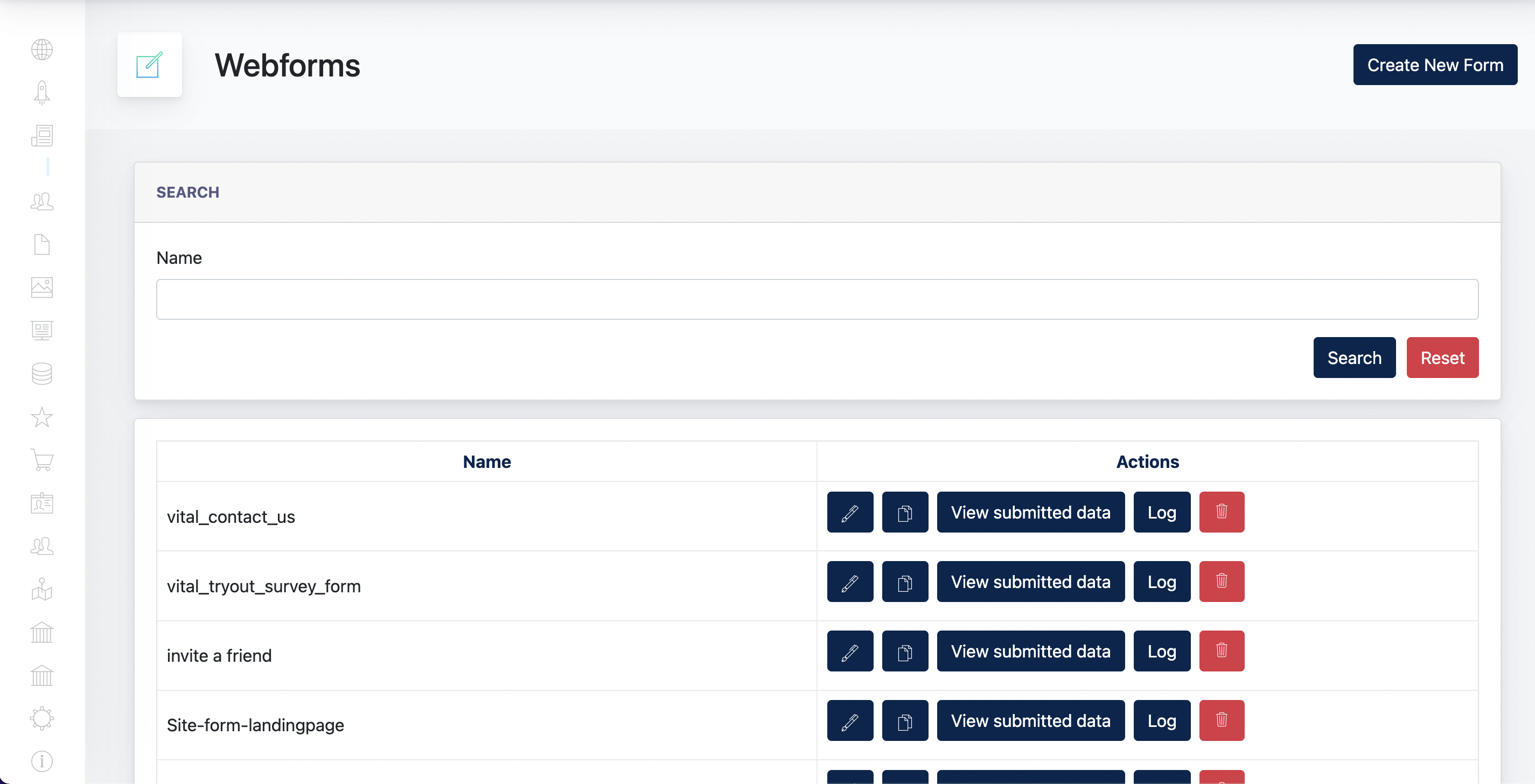
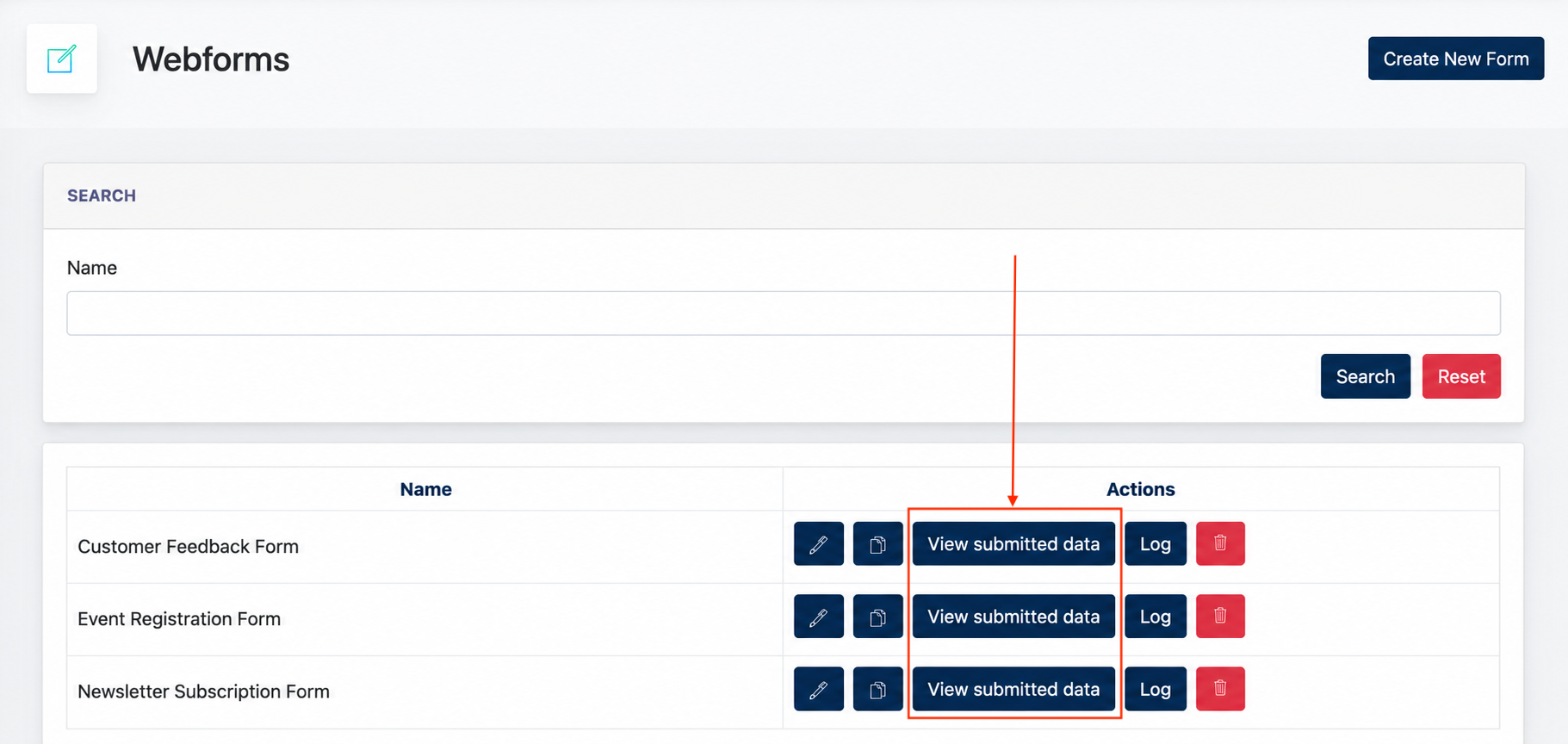
The Site Form Listing page provides an overview of all forms created in Ark. From this page, Administrators can search, manage and monitor existing forms.
Administrators can perform the following actions:
| Function | Description |
|---|---|
| Search | Search for a form by its name. |
| Create New Form | Create a new site form. |
| Edit | Modify an existing site form. |
| Duplicate | Create a copy of an existing form. |
| View Submitted Data | View all submissions received for the selected form. |
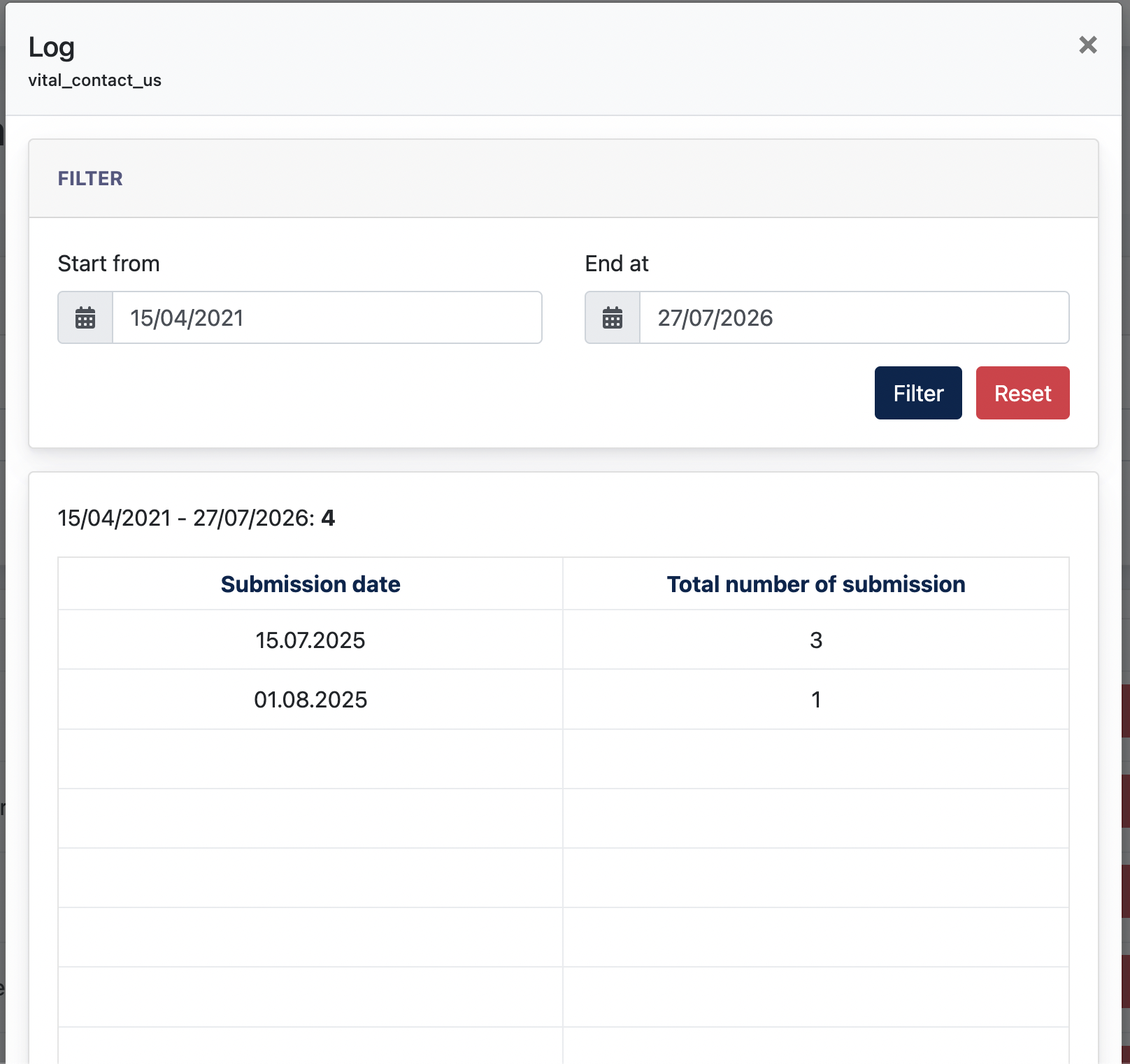
| Log | View a summary of form submissions grouped by date within a selected date range. This feature is intended for monitoring submission activity. |
| Delete | Permanently remove the selected form. |
Screenshot of "Log":
2. Create New Form
To create a new site form, click Create New Form from the Site Forms listing page.
The form editor consists of four configuration tabs:
- General – Configure the form settings, appearance, and form content.
- Email – Configure email notifications sent after a form submission.
- Marketing Funnel – Configure Marketing Funnel integration (available only when the Marketing Funnel module is subscribed).
- Newsletters – Configure Newsletter integration (available only when the Newsletter module is subscribed).
2.1 General Tab
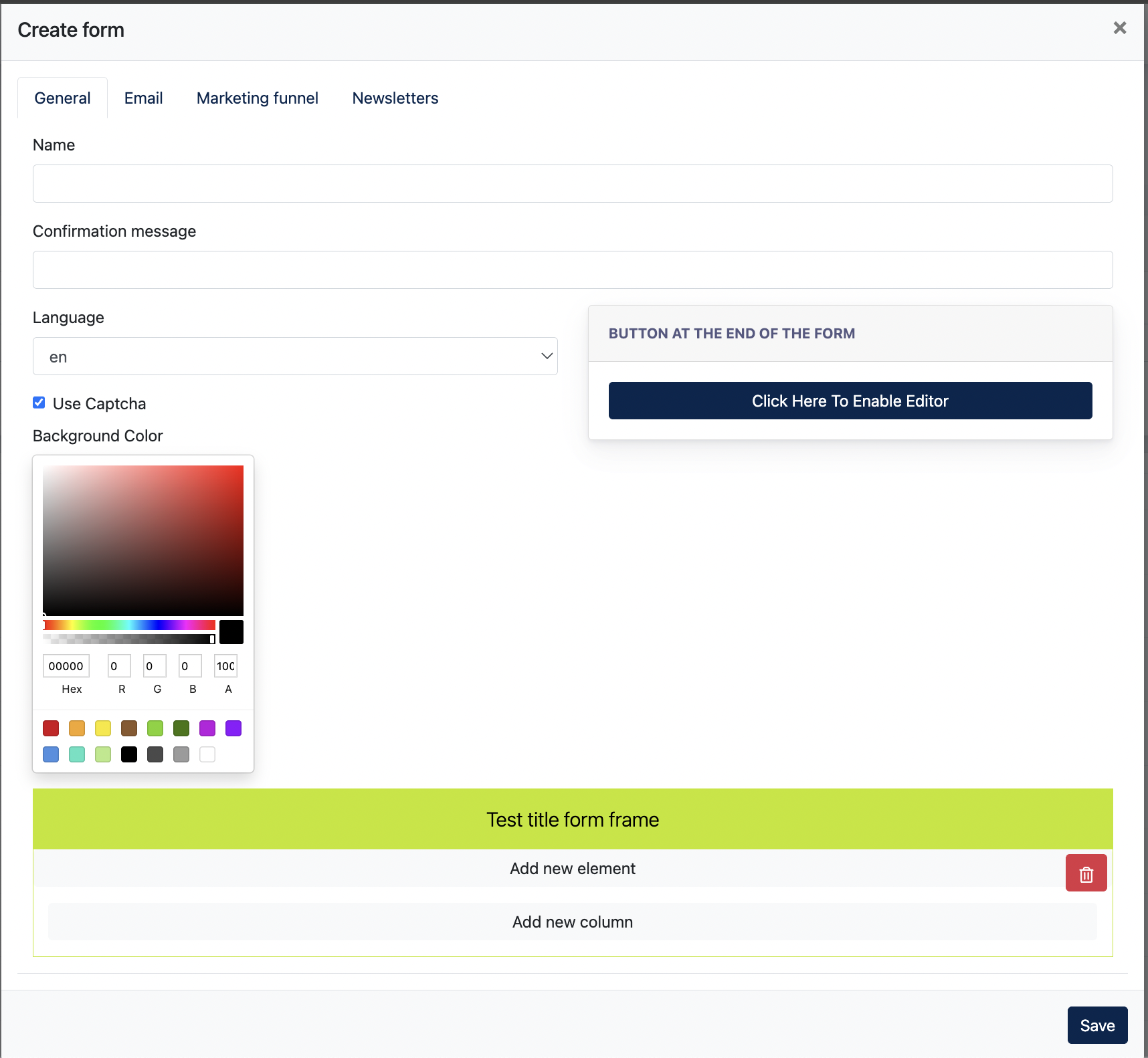
Configure the basic settings, appearance, and content of the site form.
| Field | Description |
|---|---|
| Name | Enter a unique name to identify the form in the Site Forms listing. This name is for administration purposes only and is not displayed to website visitors. |
| Confirmation Message | Enter the message displayed to visitors after a successful form submission. |
| Language | Select the language used for the form. |
| Use Captcha | Enable CAPTCHA verification to help prevent spam submissions. |
| Background Color | Select the background colour of the form. |
| Button at the End of the Form | Configure the submit button displayed at the bottom of the form using the built-in button editor. |
| Form Builder | Design the form by adding rows, columns, and form components. Components can be arranged and customised to suit the desired layout. |
2.2 Email Tab
The Email tab allows Admin to configure the email notifications sent when a visitor submits the form. Separate email templates can be configured for the form recipient and the form sender.
| Field | Description |
|---|---|
| Email Recipients | Enter one or more recipient email addresses that should receive notifications when the form is submitted. Separate multiple email addresses using a semicolon (;). |
| BCC Email Address | Enter one or more BCC email addresses to receive a blind copy of the notification email. Separate multiple email addresses using a semicolon (;). |
| Email Subjects | Enter the subject line for the notification email sent to the recipients. |
| Email Content | Compose the email body that will be sent to the configured recipients when the form is submitted. Supports rich text formatting and multilingual content. |
| Email Content for Form Sender | Compose the email that will be sent to the visitor after a successful form submission. Supports rich text formatting and multilingual content. |
Note: Visitors who provide an email address in the form will automatically receive a copy of their submission.
2.3 Marketing Funnel and Newsletter Tab
The Marketing Funnel and Newsletters tabs are only available when the respective modules are subscribed. Their configuration is covered in the corresponding Marketing Funnel and Newsletter chapters of this manual.
2.4 Form Components
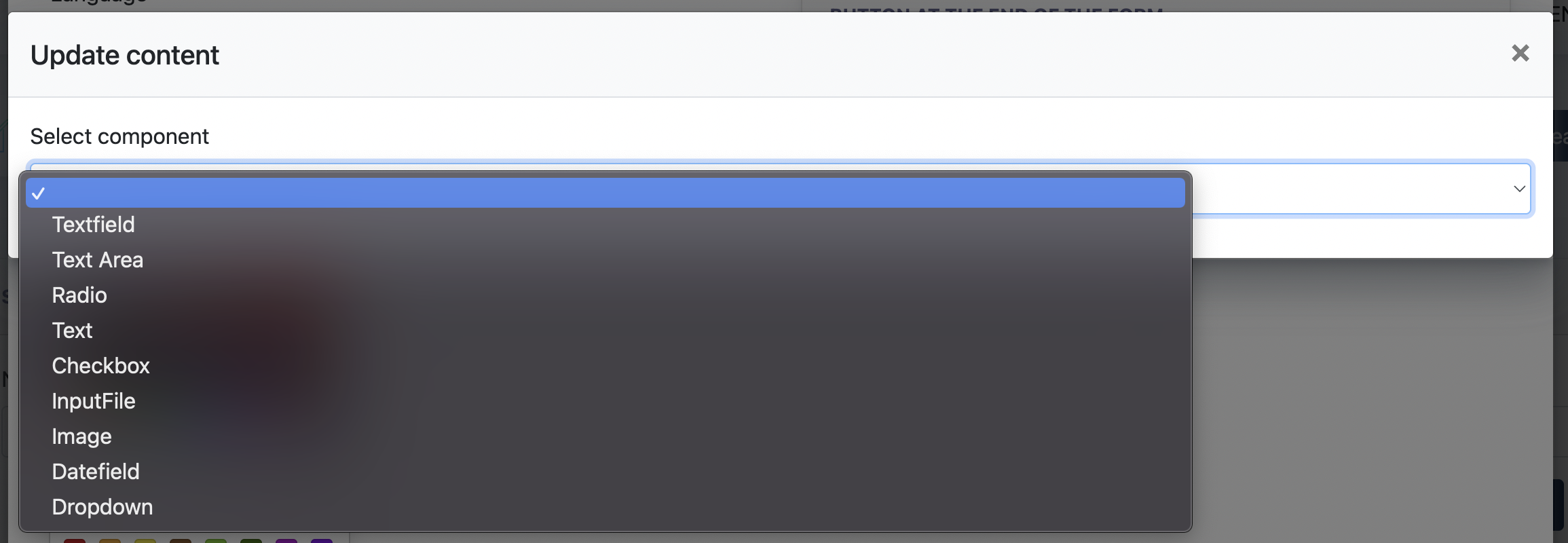
Click "Add New Element"

Select a component to add to the form:
After adding a component to the form, click the Edit icon to configure its settings.
Each component opens a configuration dialog where you can customise its appearance and behaviour. While the available settings vary depending on the selected component type, most components provide options such as labels, layout, validation, and display settings.
Note: The available configuration options depend on the selected component. This manual focuses on the purpose of each component rather than documenting every individual configuration option.
Available Form Components :
| Component | Description |
|---|---|
| Textfield | A single-line input field used for short text such as names, email addresses or phone numbers. |
| Text Area | A multi-line input field for longer responses, comments or messages. |
| Radio | Displays a list of options where the user can select one option only. |
| Text | Displays static text such as instructions, descriptions or headings. No user input is required. |
| Checkbox | Allows users to select one or more options or acknowledge a statement, such as accepting Terms & Conditions. |
| InputFile | Allows users to upload one or more files as part of the form submission. |
| Image | Displays an image within the form for branding, illustration or additional information. |
| Datefield | Allows users to select a date using a date picker. |
| Dropdown | Displays a list of predefined options from which users select a single value. |
After a component is added, Admin clicks the Edit icon to configure the component's properties.
The available configuration options depend on the selected component. This manual focuses on the purpose of each component rather than documenting every individual configuration option.
3. View Submitted Data
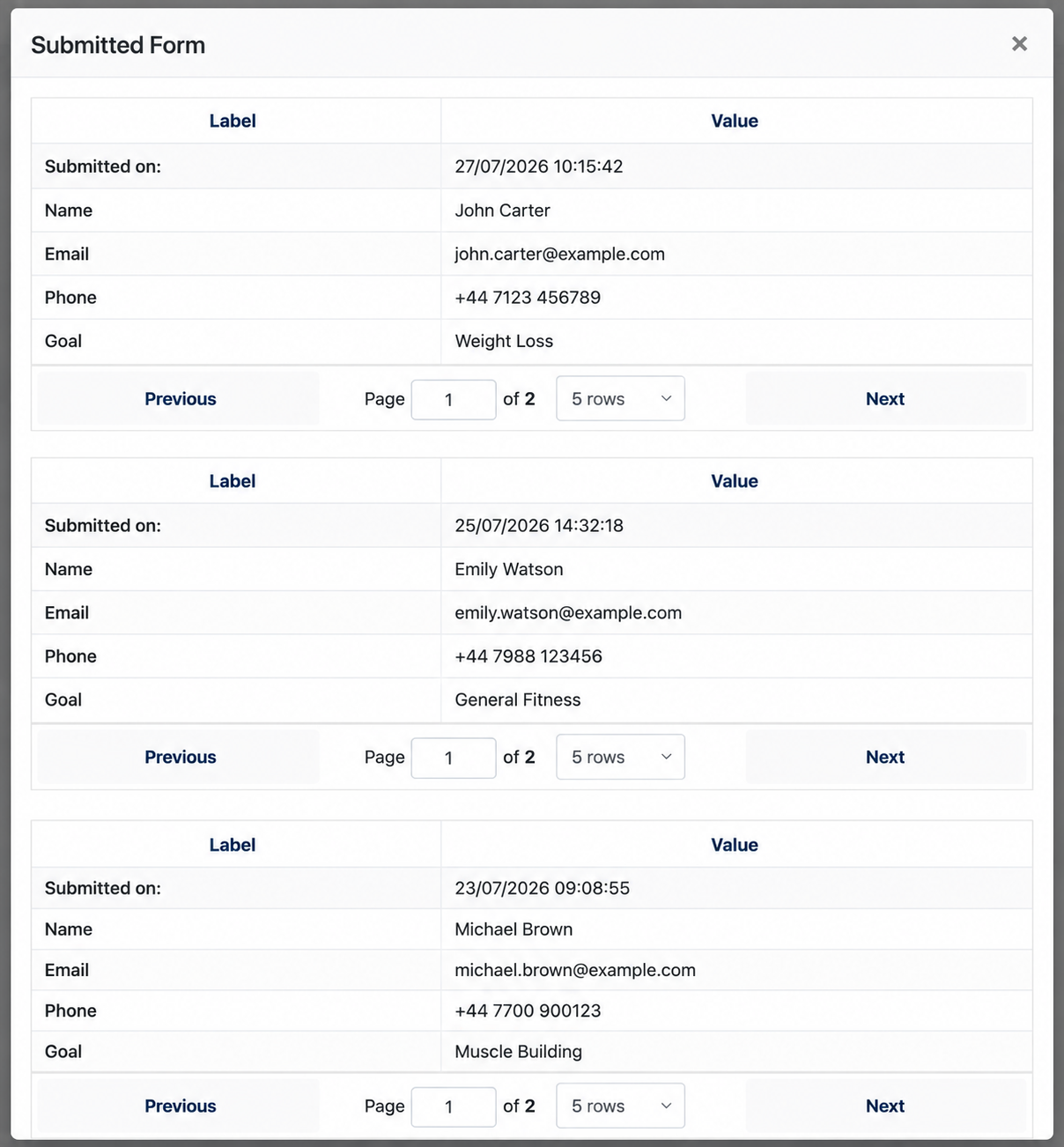
Click View Submitted Data to view all submissions received for the selected site form. The page displays the submitted values for each form entry and allows administrators to browse through submissions using the built-in pagination controls.
4. Inserting a Site Form into a Web Page
After creating a Site Form, it can be embedded into any page through the Page Editor. Once inserted, the selected Site Form will be displayed in the page section and can be published together with the page.
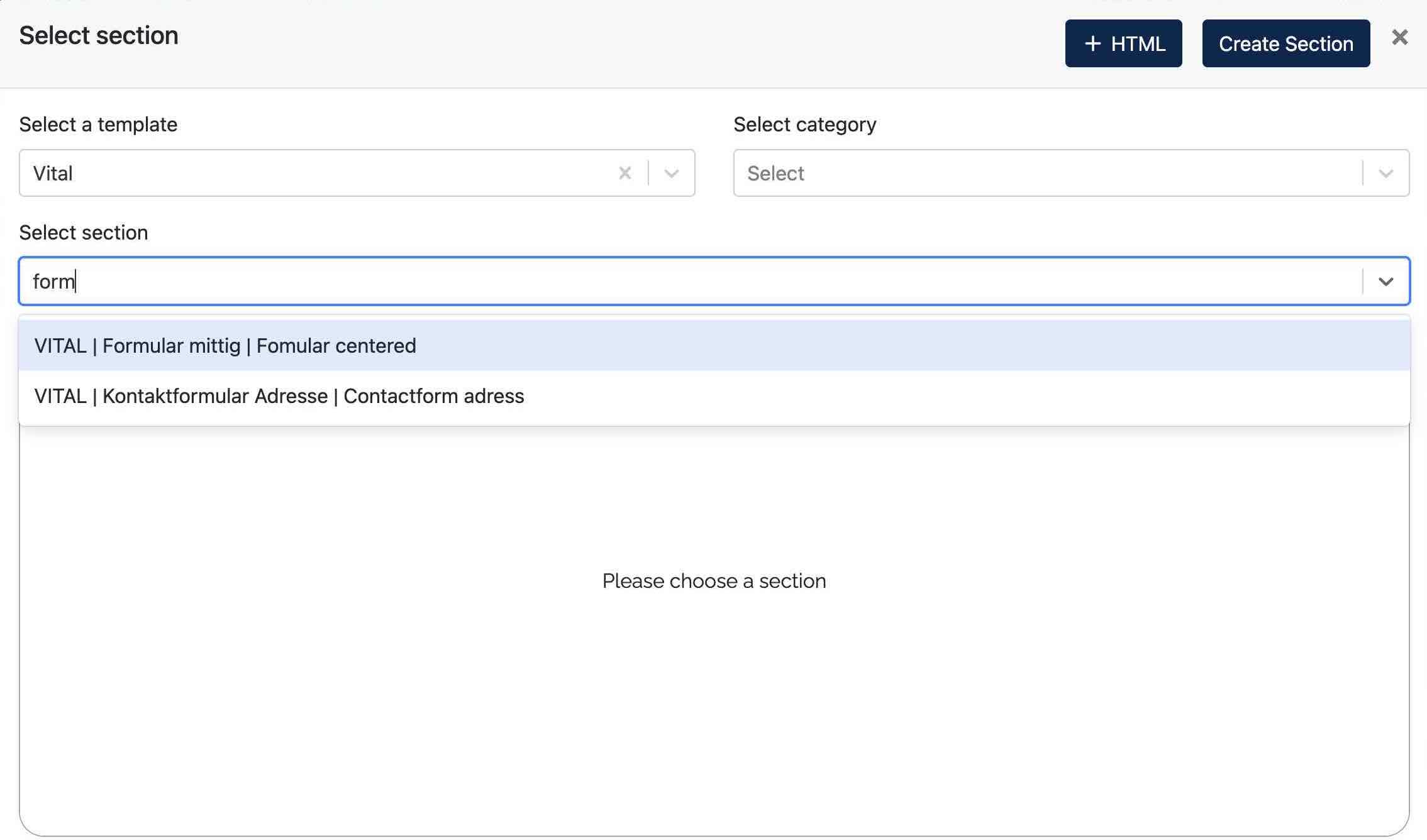
Step 1: Navigate to Edit Page and click the + button in the section toolbar.

Step 2: In the Select Section dialog, select the appropriate template and choose the section that supports Site Forms.
Step 3 : Once the Site Form has been embedded, click Edit Section to configure the Site Form.
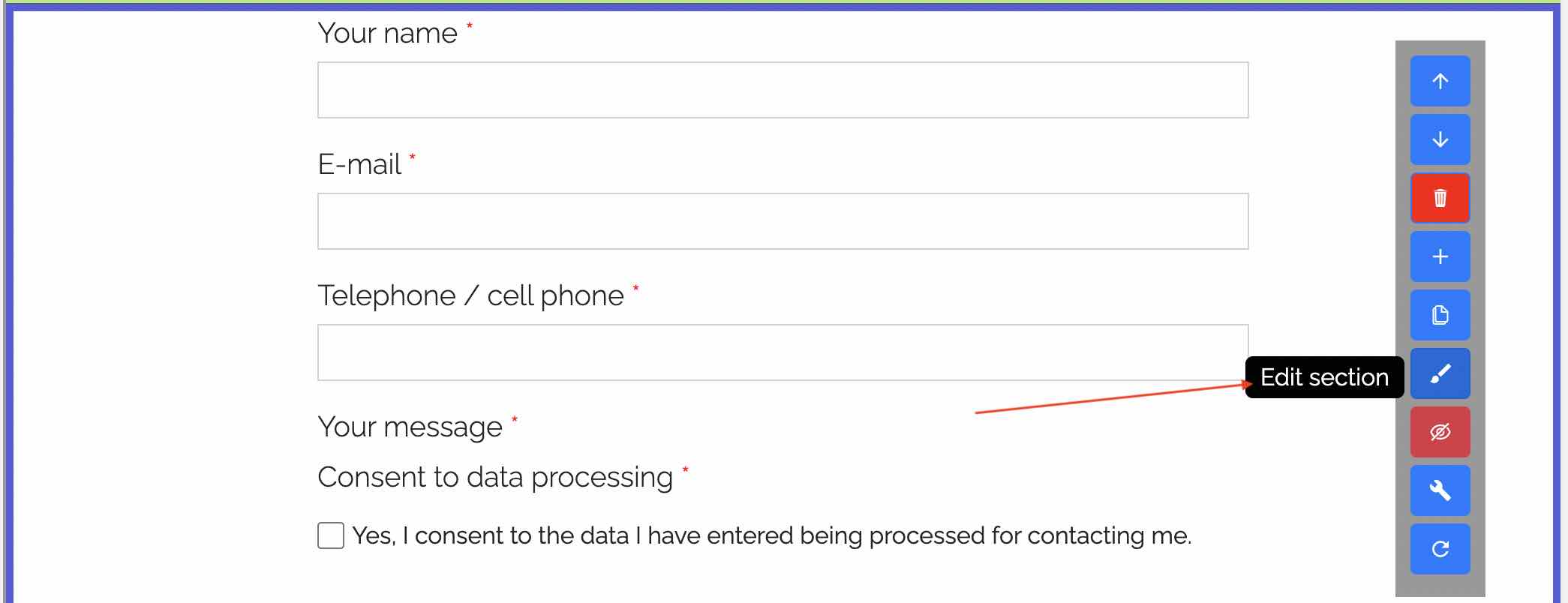
Step 4: From the Select Site Form drop-down list, choose the Site Form you want to display.
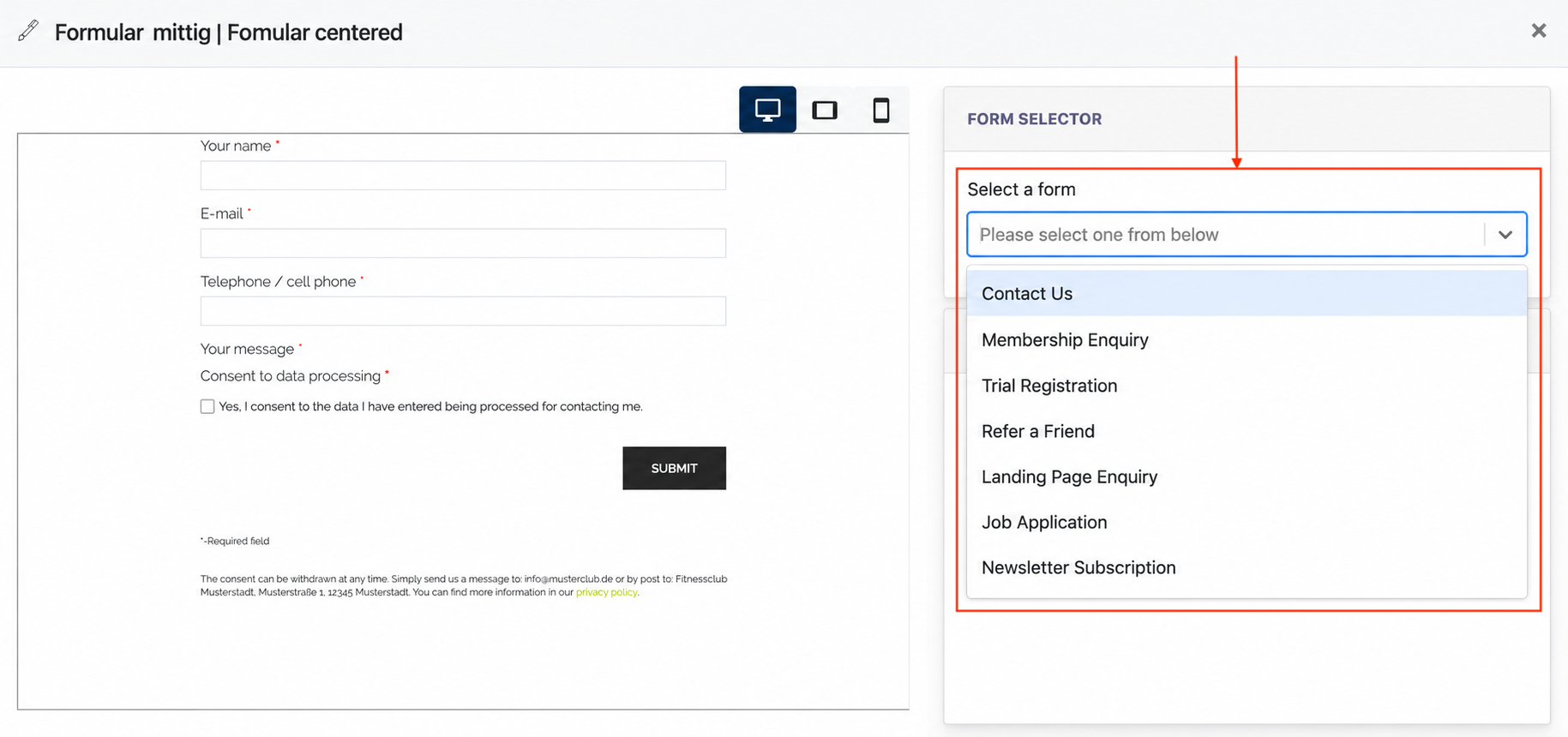
Note: The Select Site Form drop-down displays all Site Forms created in the Site Form module. The same Site Form can be reused across multiple pages without creating it again.
Result: The selected Site Form is immediately loaded into the page and displayed on the live website.
- the end -